Sara Andreasson
Sara Andreasson has been working as a freelance illustrator for over ten years. Her clients span the fields of art, media and brand communication, including cultural institutions, sports brands and leading newspapers and magazines across Europe and the United States. Her work appears regularly in The New York Times, The New Yorker and Apartamento Magazine, and she has created commissions for commercial clients such as Google, Adidas, Converse, Selfridges and Gucci.
Among her notable projects are a Google Doodle marking Sweden’s participation in the 2019 Women’s World Cup, a book cover illustration for Penguin Essentials, an animated campaign on sustainable materials for Selfridges, and a series of illustrated posters for the Théâtre du Châtelet in Paris. She also illustrated the cover artwork for Ottessa Moshfegh’s short story Imitations, published in issue no. 26 of Apartamento Magazine.
In addition to her commissioned work, she co-founded the feminist magazine BBY, where she served as art director and commissioned contributions from female and gender-nonconforming artists. Since 2025, she has run FRONDA, a nomadic gallery and arts platform, together with Josefine Hardstedt. FRONDA connects artists from Sweden and the UK, and launched its first group exhibition, Blissful Garden Concept, in March, featuring works by Neil Raitt, Dwayne Coleman and Jaana-Kristiina Alakoski.
Her work has received multiple awards, including the Kolla! Award, the Publishing Prize and recognition by Svensk Form. She has exhibited in London, Stockholm, Düsseldorf, Borås, Tbilisi, Tallinn and Treviso.
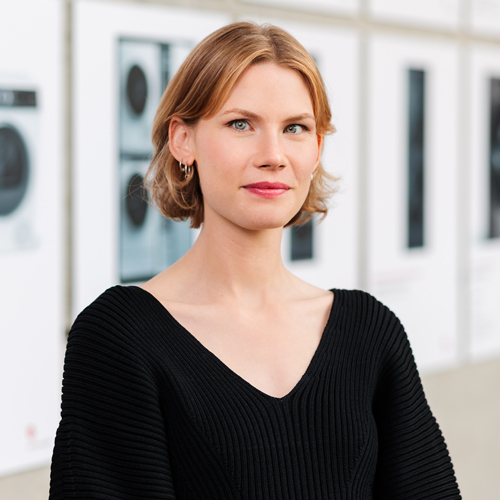
Red Dot in an interview with Sara Andreasson
You work as a media illustrator and a campaign illustrator. Which genre do you feel most comfortable with?
A combination of both is ideal for me because each presents its own unique challenges and opportunities. I have to admit I enjoy the fast pace of working with editorial illustrations, though. I love the process of translating texts into images that either align with the message or subvert it in some way. I find it incredibly intriguing how images can completely change the way we engage with a text.
Do you feel that the communications industry is starting to appreciate illustrations to a greater extent again?
I hope so, because illustrations have the power to enrich projects in such a beautiful way. They inject a sense of vibrancy and human warmth that really draws the audience in. I'm biased, of course, but I always take a second look when I spot illustrations being used in campaigns or branding.
Is illustration often underestimated by companies as an awareness-building tool?
Absolutely. Illustrations can be enormously impactful by adding value or relatability to a campaign or identity. There may be some hesitancy to use them, especially if brands don’t want to commit to an artist for a lengthy period of time, but there are certainly numerous examples of very successful long-term collaborations between illustrators and brands.
AI is a big topic in the illustration scene right now. Is this a development that concerns you?
No, not at all. I think there will be a surge in demand for handcrafted items and images with authentic sources in response to the rise of AI. I’m pretty sure that, if anything, AI is going to increase the relevance of illustrations.
Outside your work, you’re involved in cultural activities. What prompted you to co-found the magazine BBY?
It seems like an eternity ago now, but BBY was born out of frustration with the male-dominated art and design world. Basically, we wanted to create a platform that would allow us to bypass hierarchies and focus exclusively on female and transgender artists, and female authors. It was a great decision, because we discovered a whole community of independent print enthusiasts and feminist zine makers, and we made so many interesting connections along the way.
Another of your projects is the FRONDA gallery and art platform. How did it come about?
FRONDA is a new project that I launched at the beginning of the year with Josefine Hardstedt. We live in two different countries and were curious to see if it was possible to run a gallery without the constraints of a fixed space. So far, we have organised an exhibition in London, and we’re planning readings and open critiques next.
Is collaboration and networking in creative circles more important than ever today?
Yes, I think so. In times of individualism and political polarisation, collaboration has taken on more importance. But from a creative point of view, something truly magical can emerge when we adopt different perspectives and share ideas, especially across disciplines.
This was your first time on the Red Dot jury. How would you rate the quality of submissions?
The overall quality was definitely high, and some of the projects were truly outstanding. There is so much good design out there. I really appreciated the opportunity to examine such a diverse range of works, hear the other jury members’ thoughts and see emerging trends.