
"Life is a dialogue with other people."
On the passing of Peter Schmidt
His voice calm, his words deliberate, his attention always focused on the person in front of him. Designer Peter Schmidt never sought the spotlight. He preferred to let the products and works he created speak for themselves. On July 24, 2025, Peter Schmidt passed away in Hamburg.
“We have lost not only an outstanding designer who helped shape global brands like Jil Sander and Hugo Boss with his flacons, packaging, and logos,” said Peter Zec, Founder & CEO of Red Dot, “but also an exceptional human being and dear friend. I vividly remember our first meeting. Peter had invited me to a tea ceremony. Just as we were about to begin, he stood up, came over to my place, and carefully rearranged my tea set. It was fascinating.”
With Peter Schmidt, everything had its place. Anyone who had the pleasure of visiting him in Hamburg could sense that this order was a source of calm and strength. “Order allows the mind to be destructive,” he once said. That clarity was essential to him. It was the foundation for the ease and elegance of his designs.
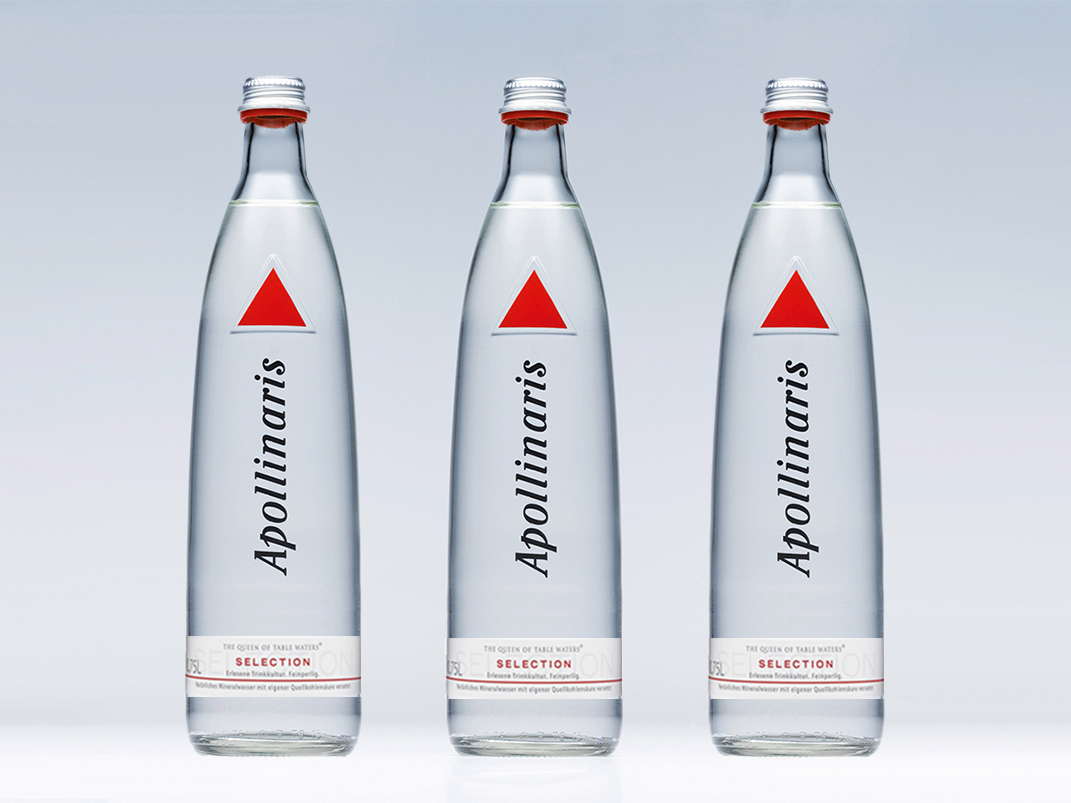
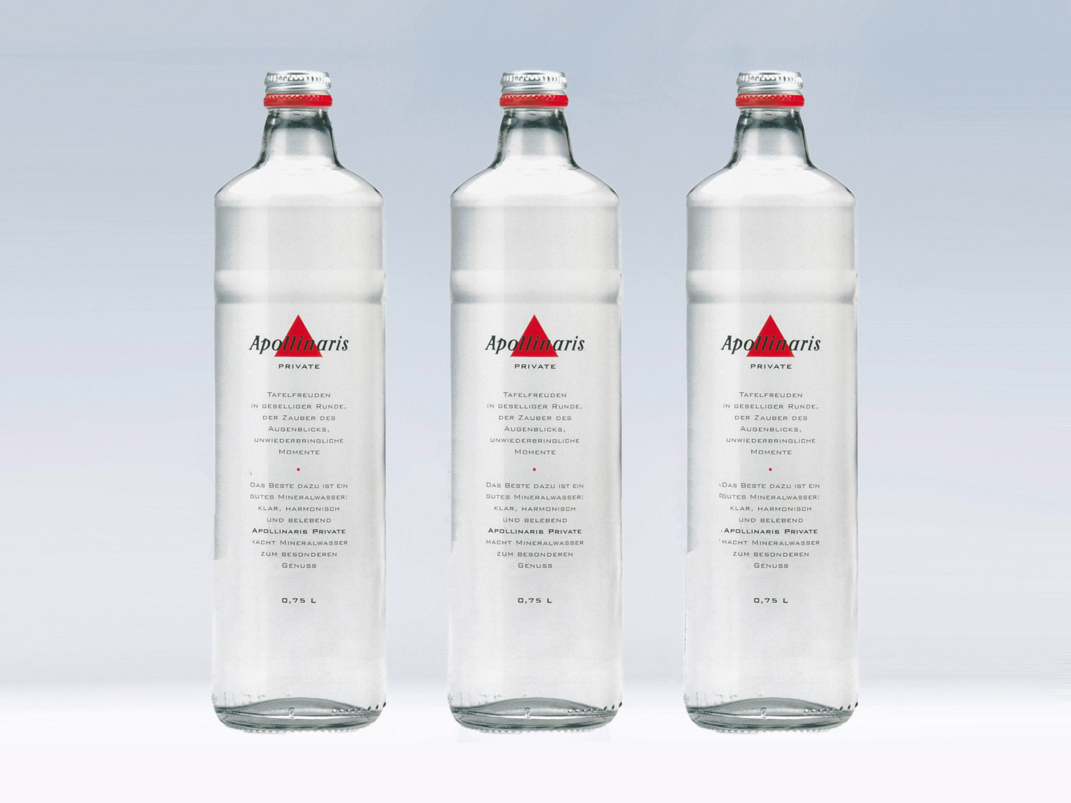
Many of his works were honoured with the Red Dot Award for high design quality, including the iconic glass bottles for Apollinaris. “The essence of water is its purity and clarity,” Schmidt once said of his design approach. “My task is to let people experience the elemental nature of things — without being didactic. Everyone knows that water’s purity is threatened. I see it as my responsibility to heighten awareness of what is happening around us. But it’s equally important that we cultivate strength alongside that sensitivity.”
Nowhere did Peter Schmidt succeed more profoundly in this than in the design of perfume flacons. At the beginning of the 20th century, Paul Poiret was the first couturier to create perfumes to complement his haute couture. Coco Chanel was the first to turn it into global success with Chanel No. 5. Jeanne Lanvin, Elsa Schiaparelli, and Christian Dior followed suit.




But no designer anywhere in the world became as closely associated with flacons and packaging as Peter Schmidt. Born in Bayreuth in 1937, he graduated in 1962 from the Werkkunstschule Kassel as a graphic designer and founded Peter Schmidt Studios in Hamburg in 1972. His international breakthrough came in 1980 with a flacon and corporate design for Jil Sander. For the perfume “Pure Woman,” he created a flacon shaped like a translucent ice cube—a minimalist statement and a bold counterpoint to the prevailing aesthetic vagueness of the time.
Schmidt consistently advocated for reduction and focus. In one interview, he remarked: “Everything is possible today, which tempts us to drift into the excessive, the disproportionate, and the utterly inappropriate.”
He went on to design flacons for Wolfgang Joop, Hugo Boss, Bogner, and Strellson — including the award-winning “Dark Blue” flacon in 2000, one of Hugo Boss’s best-selling men’s fragrances. The flacon was deliberately modeled after a cocktail shaker, evoking the nightlife of the turn of the millennium. Its striking blue colour and the combination of glass and metal captured the mood of a night out. “I’m someone who approaches everything lightly,” Schmidt once said. “I always seek lightness—even in atmospheres.” That simplicity and elegance—along with a sensitivity to mood—are visible throughout his work.
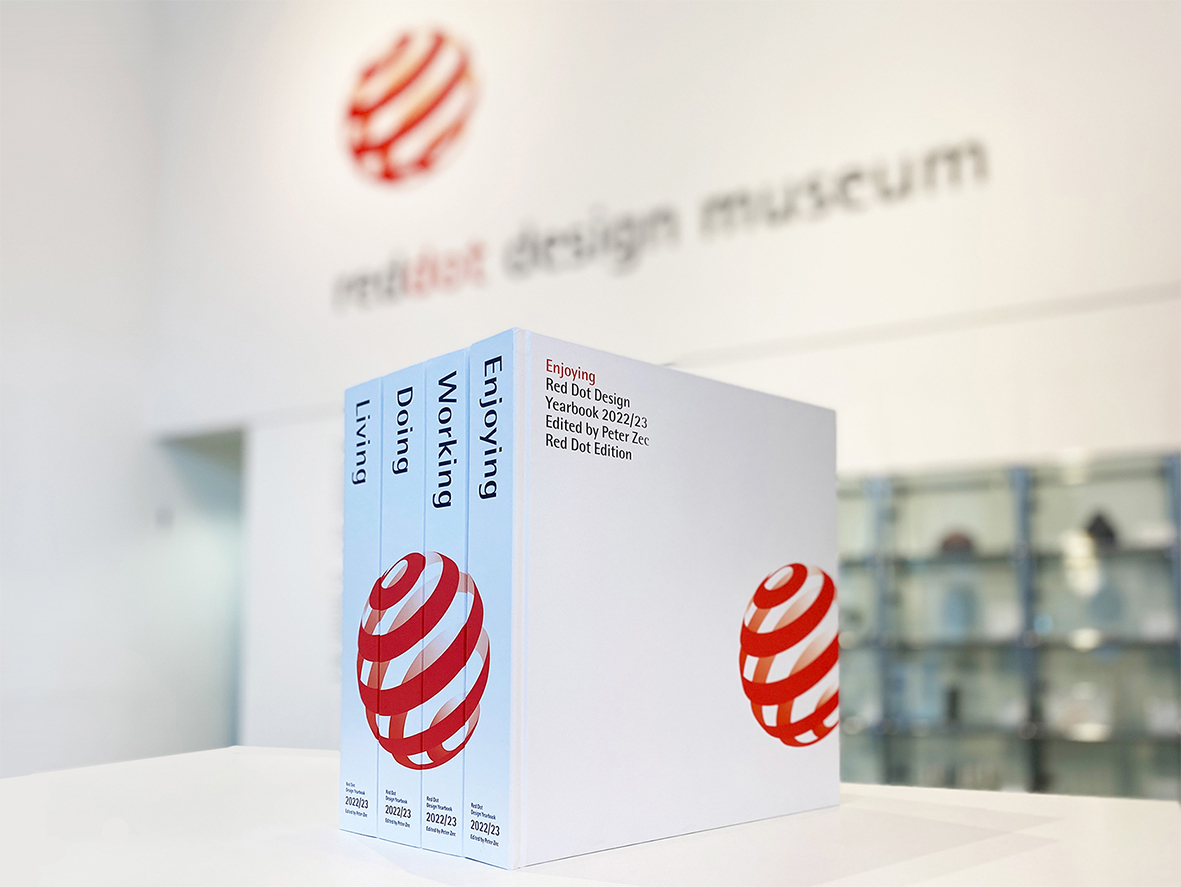
“In Italy, our award was known as punto rosso. In France, point rouge. In Asia, red dot. And in England, sometimes rather dismissively, red spot. It was time for a change. By the late 1990s, we began developing a solution. Our goal was an international brand—clear, distinctive, and universal. There was only one designer we could entrust with this task: Peter Schmidt.”
With the creation of the Red Dot logo and label, Schmidt designed a symbol of design excellence that has evolved over the last 25 years into a global brand. His three-dimensional, continuous spiral reflects the same aesthetic principles that guided his life: clarity and refinement, elegance and ease.

Peter Schmidt always followed his intuition and design principles—whether in the details of a perfume flacon or the monumental stage sets he created in a long-standing friendship with John Neumeier, former ballet director of the Hamburg Ballet. His love of the stage, of ballet and music, began in his youth in Bayreuth, when he saw Wagner’s Götterdämmerung for the first time in the early 1950s: “I was 14 when I saw Götterdämmerung—completely unprepared. I had never even been to a theatre before. It left a deep impression. That’s when I wished to become a stage designer. Of course, I didn’t yet know what that meant. But since I was good at drawing, I wanted to do something connected to the stage.”


It was a moment of awakening. Peter Schmidt realized that the world can only be changed through design. Pencil and paper were his lifelong tools for expressing his freedom and fulfilling his creative potential across disciplines. His way of being a designer was inseparable from his way of being human. His work reveals intuition, sensitivity, and strength. This quality—of truly engaging with people and things—is embedded in his creations.
In a conversation with Peter Zec, he once described the essence of good collaboration as a matter of atmosphere: “There’s something I wouldn’t want to do without—and that’s the temperature that arises when a few kindred spirits are gathered. The quality temperature. When that temperature is right, things succeed faster and better than in other conditions. You just know: this is it, and it’s good. You feel it. And I see it as my task to help create that quality temperature.”
“Next year marks Red Dot’s 25th anniversary,” says Peter Zec. “How we would have loved to raise a glass with him once more! After all, he played a crucial role in our success with the signet he designed—now a global synonym for design quality. We won’t just miss him—we will remember him vividly. A designer who earned his place in design history. A human being who became a role model—for us and for many others.”
July 27, 2025
Text: Burkhard Jacob
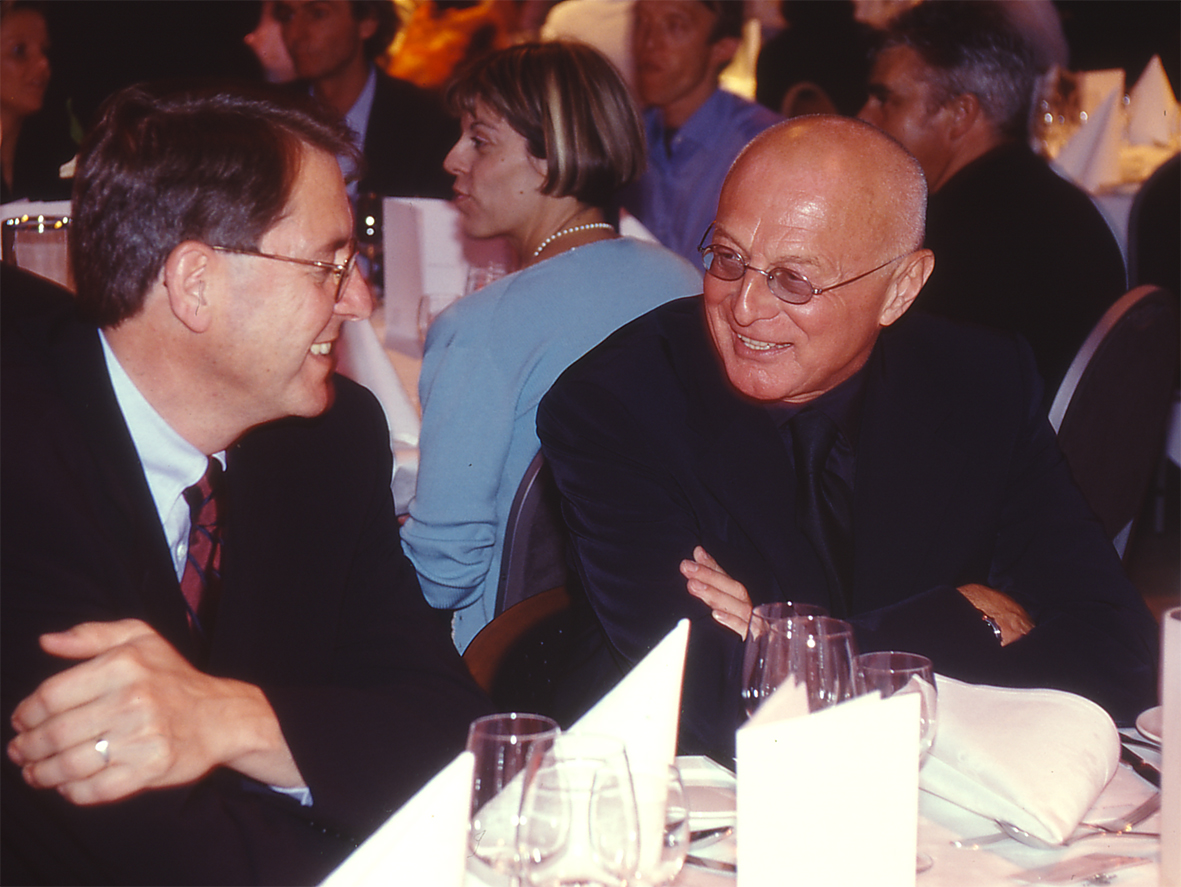
Photos: Stefan Maria Rother (Peter Schmidt at the Red Dot Gala, 2001)