Dick Spierenburg
Dick Spierenburg, born in 1953 in the Netherlands, studied architecture at Delft University of Technology and interior and product design at the Royal Academy of Art in The Hague. After graduating, he worked for over 15 years as the managing and creative director for the Dutch manufacturer Castelijn. In 1995, he initiated, curated and continued to manage three leading permanent interior design exhibitions in Amsterdam: NIC, Pakhuis Amsterdam and Post Amsterdam in Post CS.
Spierenburg established the KBDS studio with Dutch designer Karel Boonzaaijer in 2001, designing for Arco, Artifort, Castelijn, Gelderland, Hollands Licht, Minotti Italia and Montis. In 2009, he founded Spierenburg studio. His daughter Sabine joined the business a few years later, complementing the creative team with her expertise in communications. In Germany, Dick Spierenburg co-initiated “Design Post” in Cologne, a design and interior showroom for international brands, and became its creative consultant. In 2011, he was appointed creative director of imm cologne. Dick Spierenburg has been a consultant to the Orgatec trade fair since 2014, designing exhibitions and showrooms for the Museum of Applied Arts Cologne, Thonet, LINAK and Oase. In addition to being a Red Dot juror, he is a member of the jury for the interzum Awards in Italy and China.

Red Dot in an interview with Dick Spierenburg
Red Dot: Why is light so important for interior design?
Dick Spierenburg: Light is always important as it determines the atmosphere of spaces. A play with light and shadow makes interiors vivid and expressive. Energy-saving light sources enable designs characterised by slim and free forms. In combination with smart technology, there is a lot of innovation in the lighting industry.
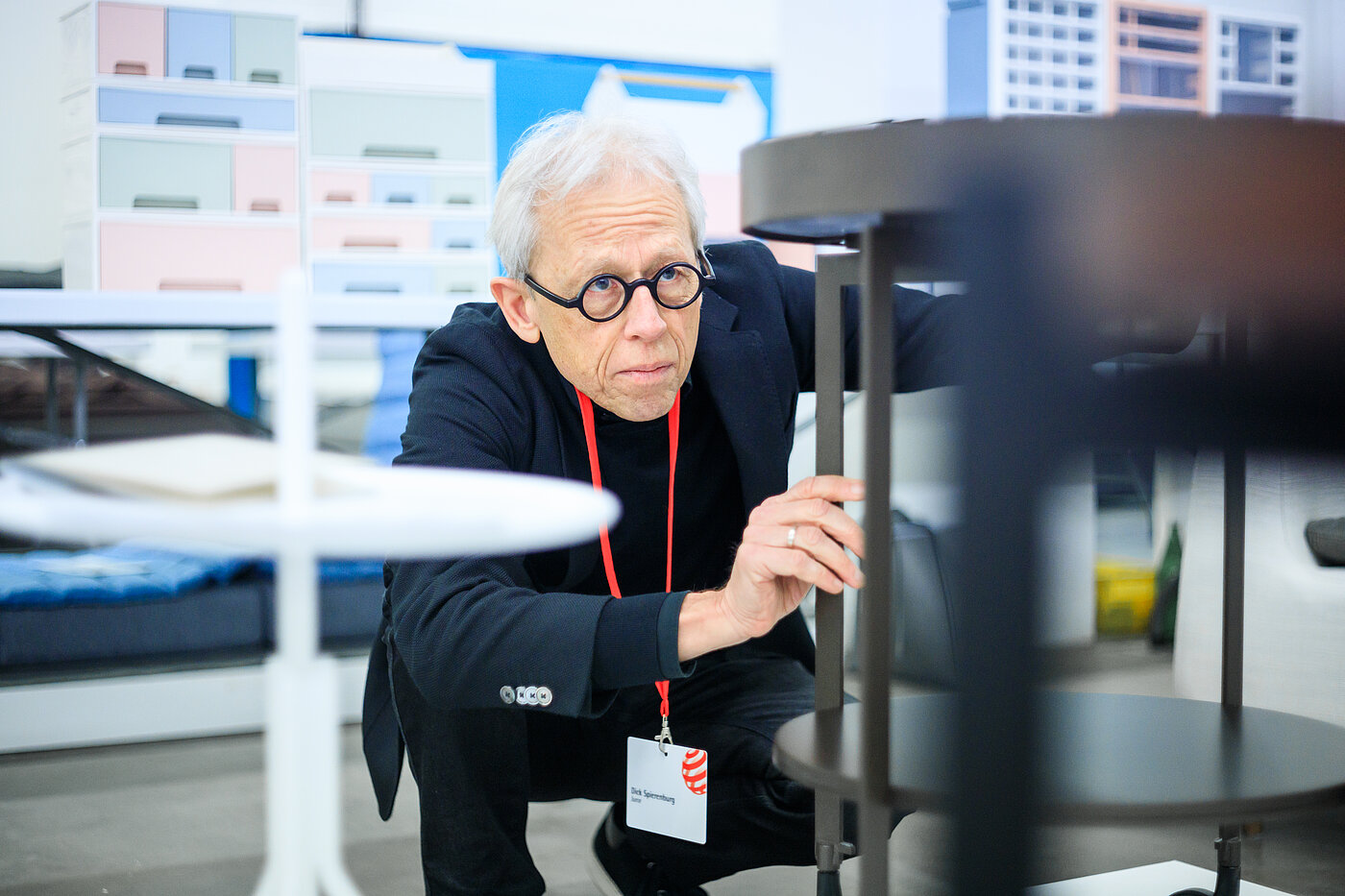
What do you pay special attention to when evaluating products?
When evaluating products, my first question always is “what’s the added value?”. Designers have to focus on using less resources, both in terms of materials as well as energy and logistics. What matters is how it was designed, produced and what extras it brings. Will it surprise potential users and will it work?
Which product has made a lasting impact on the history of design?
Products that offer real innovation such as those by Bauhaus designers and by Le Corbusier, Prouvé, Eames, Jacobsen or Magistretti have made a lasting impact and have the potential to become classics.