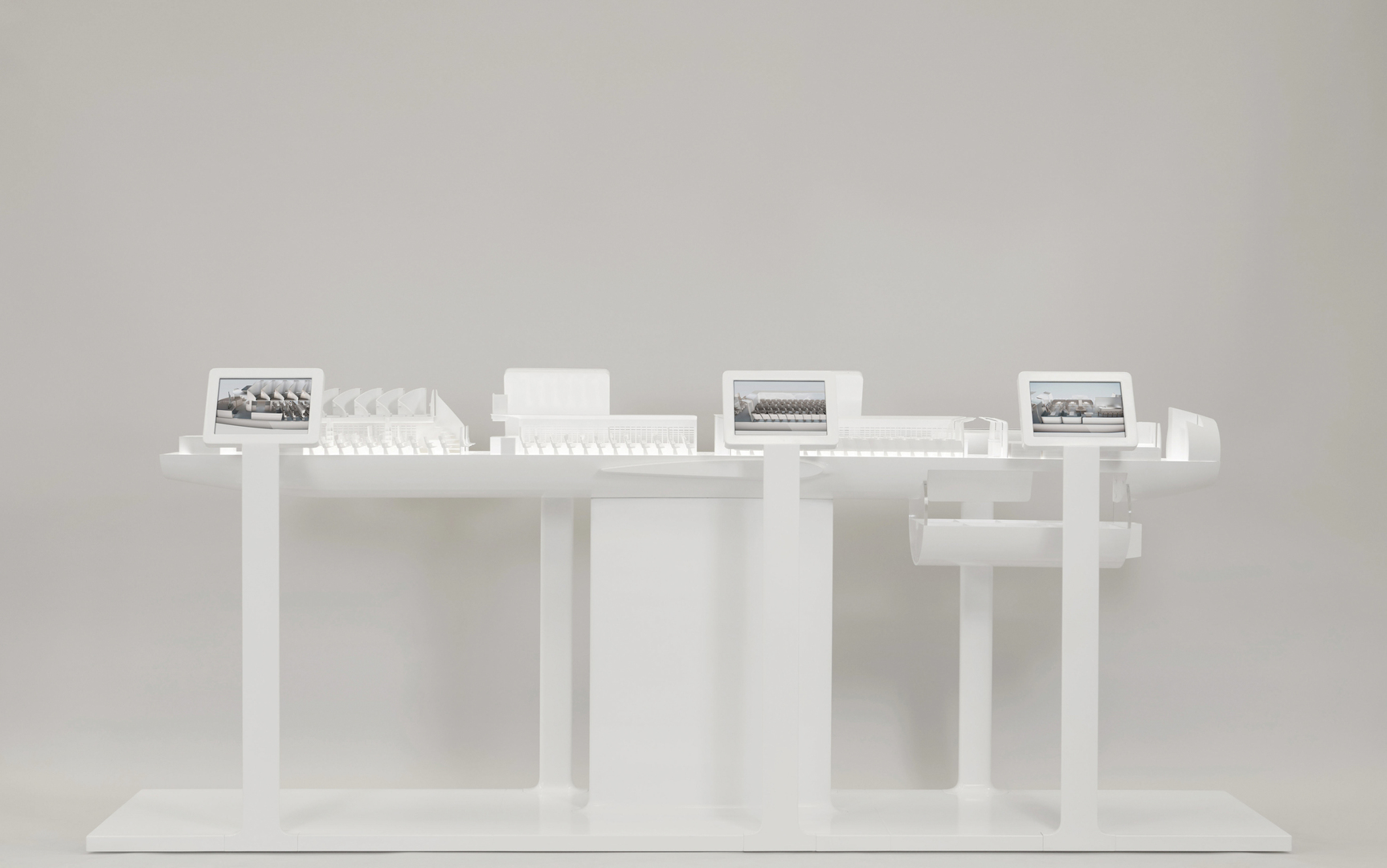
Themed “Desire Lines”, the concept sets out to eradicate the traditional grid-like aircraft interior layout and redefine how passengers move around the cabin. “Desire Lines” takes inspiration from the natural flow and free movement of people – specifically in urban settings, creating an environment where passengers will feel energised, revitalised and rested. The concept demonstrates a reclassification that shifts away from a hierarchical system. With only a small percentage reduction on capacity, different revenue streams are created using berths, modular seating and self-service points.
The three key themes of the concept are: creating a more human experience on-board the aircraft that promotes passengers’ well-being; challenging the architecture of today’s platforms by creating new user experiences; exploring new ways to support airlines in differentiating themselves and in generating additional revenue streams.
An accompanying visual effects work is also featured on six screens mounted on a light box. The screens bring the interior concept to life through rendered images that show fluid natural movements of passengers around the cabin by visualising the following areas:
1. Sleeper Service: Private suites with a sofa bed, wide-screen in-flight entertainment and a social or working space for two passengers.
2. Universal Rest (premium sub-cabin): A premium seat designed to give maximum freedom of movement.
3. Blended Space (lounge): The layout of the cabin’s amenities makes accessing the galleys, lavatories or social spaces a pleasurable and interactive experience.
4. Private Berth: The crown space of an aircraft traditionally dedicated to cabin bins or crew rest is used to offer a private bed to passengers.
5. Light Lounge (corridor): The corridor provides a more relaxed space for a more efficient and pleasant boarding and access.
6. Modular Economy: A modular and customisable seating system to meet the needs of solo travellers and families.