Volumetric Urban Space
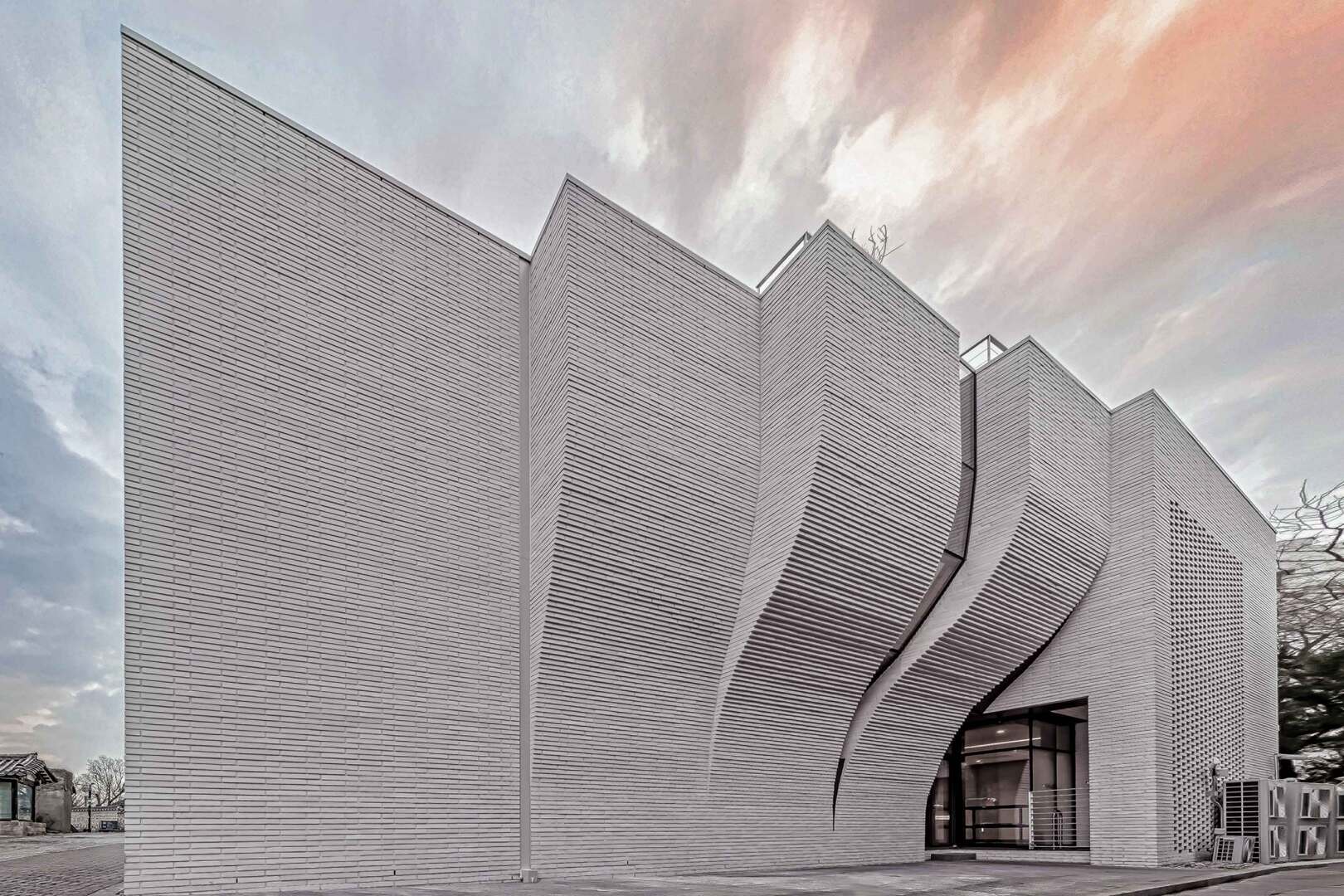
The site is situated in the heart of a historical district, close to the Chosun Palace. As such, the streets are narrow and interconnected, resulting in small open spaces of varying sizes and functions. There are also numerous traditional buildings with varying textures that remain nearby. Naturally, the area has grown to become a tourist hotspot.
The pedestrian space is critical, and it was vital to make the adjacent narrow pedestrian street friendly and intimate. The design was based on research into the quality and quantity of the street. The building is set back to create an open space on the side of the street, carving out an eco-friendly area that coexists with the historical building unit. This was carefully controlled to generate a rhythm between the narrow alleyway and the open public space. Since the open space is on the west side and attached to the building, it serves to connect to the narrow street while also creating an enclosed space through the curved brick wall and roof design.
The façade, which is integrated into the historical area, is carefully developed by human movement and robust traditional street logic. It is divided vertically by open space, glazing, entrance, and landscape to interact with pedestrians on the street. The existing narrow alleyway is also connected to the building on the inside while linked to various communal spaces, leading to the roof garden with a panoramic view of the historic city. The space is kept opened to the street and connected to the building vertically via a void space on each floor. The void spaces take the light and street conditions into the building, as well as human movement inside and outside of the building.
Red Dot Award: Design Concept | Ready to Launch | Architecture

크레딧
-
Studio:LESS Architects, South Korea
-
Design Lead:Woo Junseung
-
Design:Kim Dongwook, Kim Hokyoum, Kim Jinkwan, Kim Junhyeong, Lee Sunhwa, Pyo Seongmi, Song Siyeol