
Award-winning timepieces at the Red Dot Award
For a long time, energy infrastructure was shaped almost exclusively by functional and technical requirements. Electricity pylons were designed as neutral engineering structures, prioritising efficiency, safety and standardisation, while questions of identity, symbolism or emotional resonance were largely excluded from the design process. Although highly visible, these structures were never intended to communicate meaning or relate to their surroundings. As the energy transition accelerates, grid expansion is no longer perceived as a temporary intervention, but as a permanent and highly visible transformation of the landscape.
Across Europe, opposition to new power lines is growing — not because their necessity is questioned, but because infrastructure is often experienced as imposed rather than integrated. Austrian Power Giants responds to this acceptance gap by reframing visibility itself: not as a liability, but as an opportunity for design. The concept was awarded a Red Dot in the Red Dot Award: Design Concept 2025.
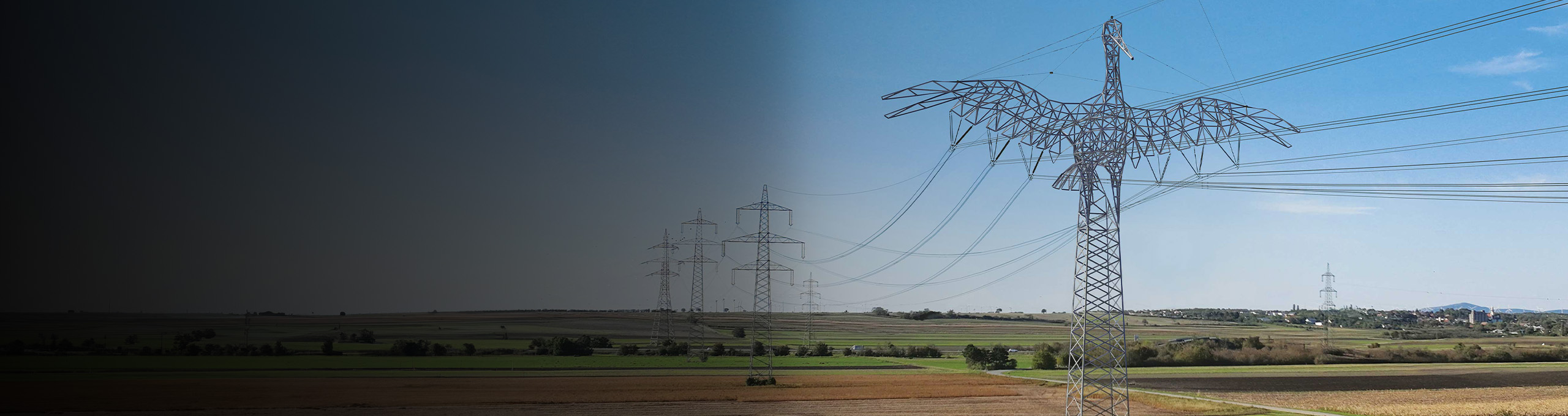
Instead of attempting to conceal infrastructure, Austrian Power Giants positions design as a mediator between technological necessity and public perception. The project introduces animal-inspired electricity pylons that establish an emotional and cultural connection to their surroundings. These structures do not seek to dominate the landscape, nor do they attempt to disappear within it. Rather, they aim to belong.
The underlying concept assigns each of Austria’s nine federal states its own “Power Giant”, shaped after an animal that symbolises regional identity and local ecosystems. In doing so, infrastructure becomes recognisable, relatable and anchored in place — transforming anonymous pylons into meaningful landmarks.
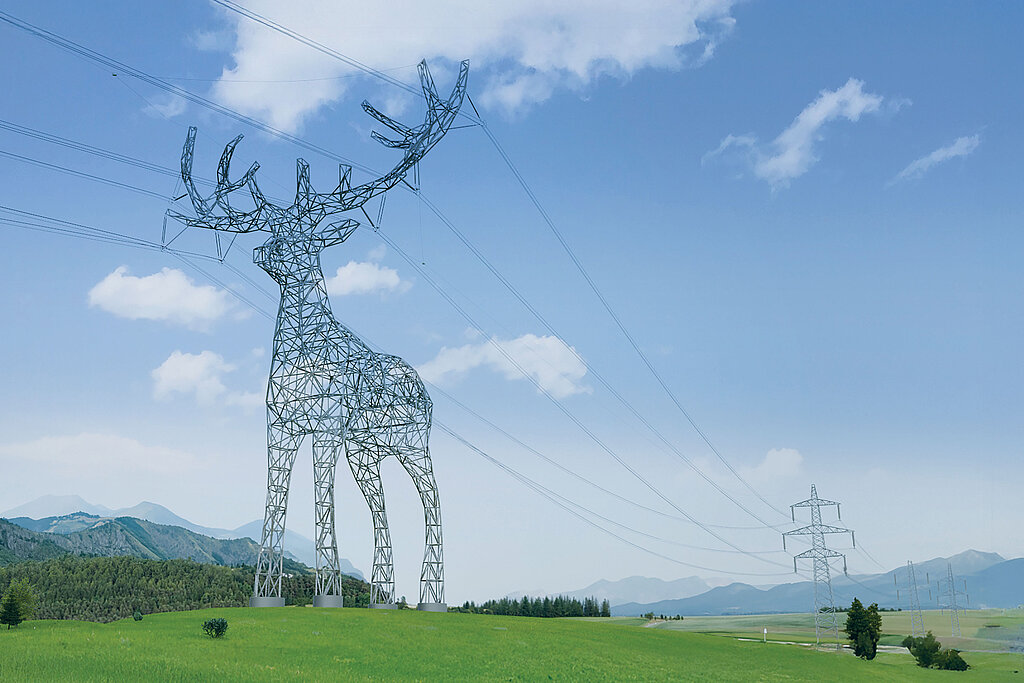
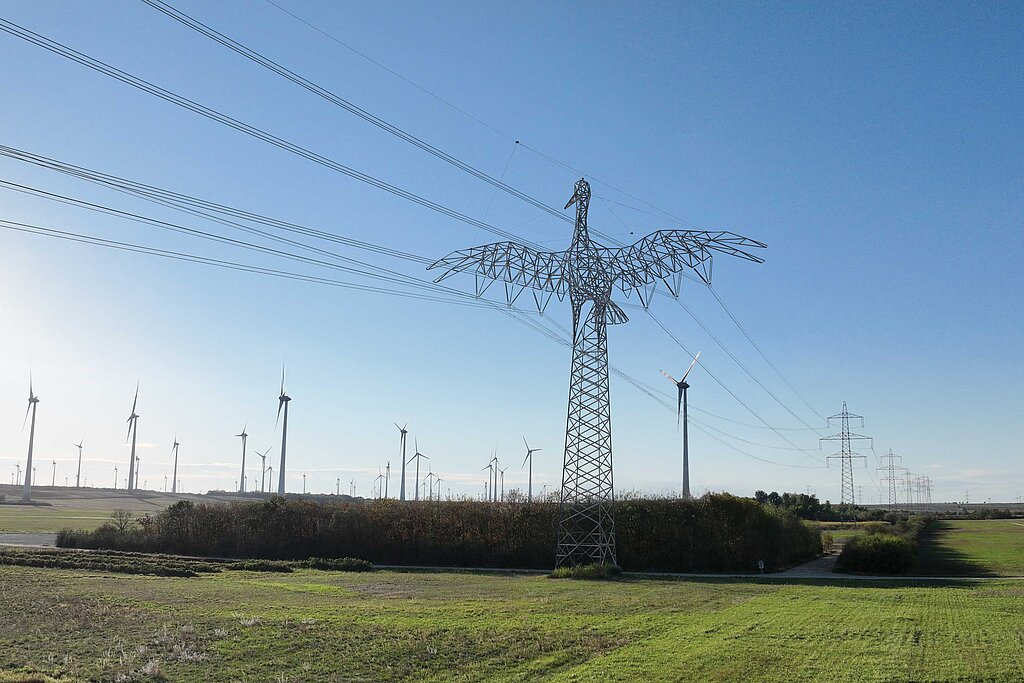
The first realised designs illustrate how symbolic storytelling and infrastructure can intersect. For Burgenland, the stork was chosen as a representative animal due to its annual migration and long-standing presence in the region. In Lower Austria, the stag reflects the wooded foothills of the Alps and the cultural significance of wildlife in the landscape.
By translating these animals into structural forms, Austrian Power Giants creates a new narrative for grid expansion: one that moves away from confrontation and towards identification. The pylons become markers of regional character, inviting curiosity rather than resistance.
Crucially, the expressive nature of the designs does not come at the expense of technical performance. The stork and stag pylons have already been developed as prototypes and pre-tested for structural stability and high-voltage performance. This ensures that the sculptural forms meet the rigorous safety and functional standards required for modern electricity transmission.
In this sense, Austrian Power Giants challenges a common assumption: that emotional design and engineering efficiency are mutually exclusive. Instead, the project demonstrates how aesthetic expression can coexist with and even enhance infrastructural functionality.
Austrian Power Giants marks a shift in how we think about the role of design in large-scale systems. Rather than treating infrastructure as a necessary disturbance that must be visually minimised, the project argues for a more open, expressive approach. One that acknowledges the permanence and visibility of the energy transition and uses design to make it legible and culturally resonant.
As societies move towards electrification and decarbonisation, infrastructure will increasingly shape our landscapes. Projects like Austrian Power Giants suggest that acceptance may not come from hiding these changes, but from designing them in ways people can recognise, understand and ultimately embrace.
The Red Dot Award: Design Concept is aimed at visionary designers who develop answers to tomorrow’s challenges with bold ideas and forward-looking concepts. Submissions at the early bird rate are possible until 21 January 2026, with the regular registration period running until 29 April 2026. Now is the right time to submit innovative concepts, highlight new perspectives and actively participate in shaping the world of tomorrow.

