




Social media campaign combining pop culture and brand communication

Valentine’s Day often feels timeless, however, the version we know today is surprisingly modern. While the feast day of St. Valentine has roots late antiquity, Valentine’s Day as a mass cultural event was largely reconceptualised in the 19th century, when industrialisation, urbanisation, and new printing technologies converged with emerging consumer culture. Mass-produced Valentine cards, ornate typography, and symbolic imagery (hearts, cupids, flowers) transformed private affection into something that could be designed, produced, and sold. In other words: love became a design problem – and an opportunity.
In the 1800s, advances in colour printing and paper manufacturing made decorative cards affordable for the middle class. Publishers quickly learned that emotion could be standardised through visual language: lace patterns printed on paper, romantic scripts, and iconography that communicated affection instantly. These early designs did more than decorate feelings – they structured how love was expressed, setting visual conventions that still define Valentine’s Day today.
Today, design for Valentine’s Day extends far beyond cards. It includes packaging, product design, digital experiences, branding, and spatial design, all working to stage intimacy in physical and virtual spaces. Examples of this can be seen in several projects that were awarded in the Red Dot Award: Brands & Communication Design: from innovative packaging and interactive digital campaigns to humorous online films that demonstrate new approaches to emotional design.
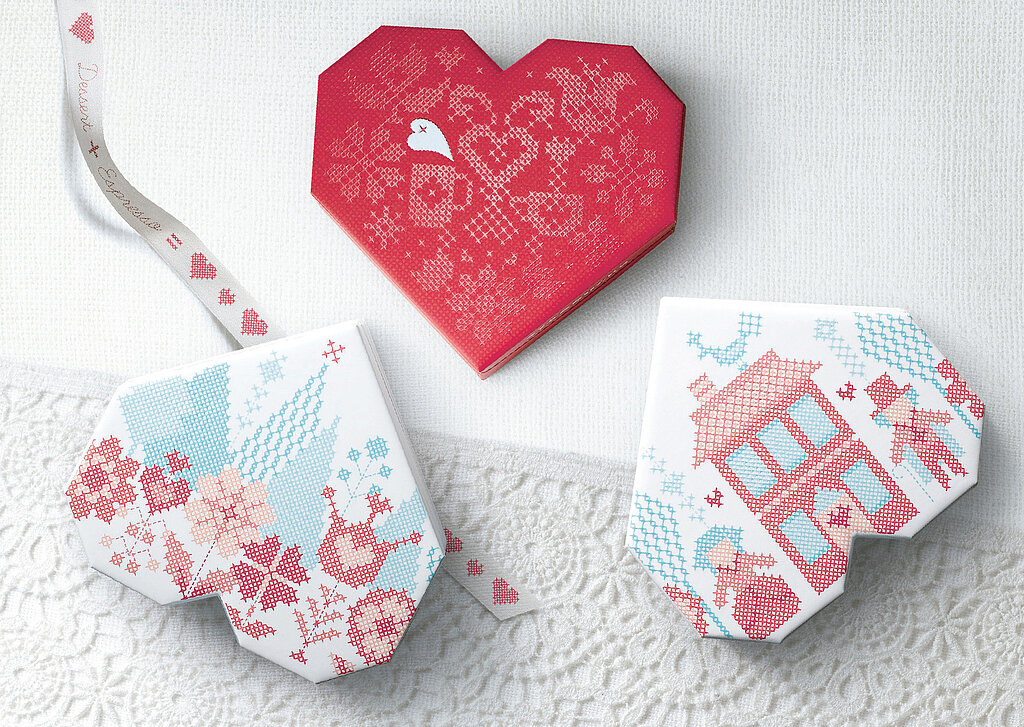
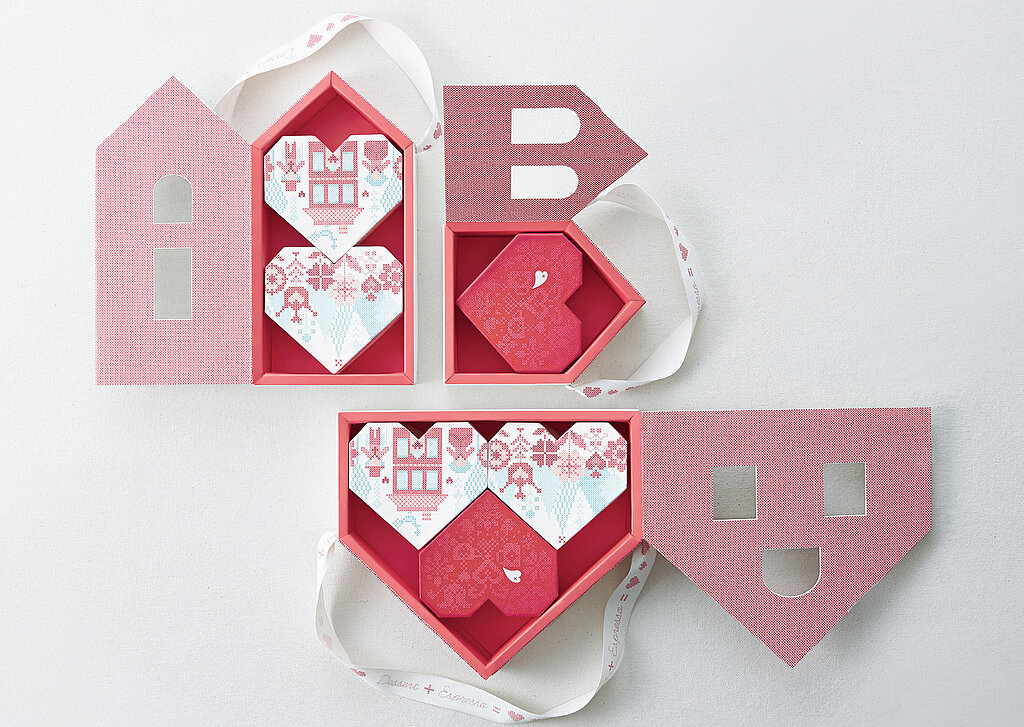
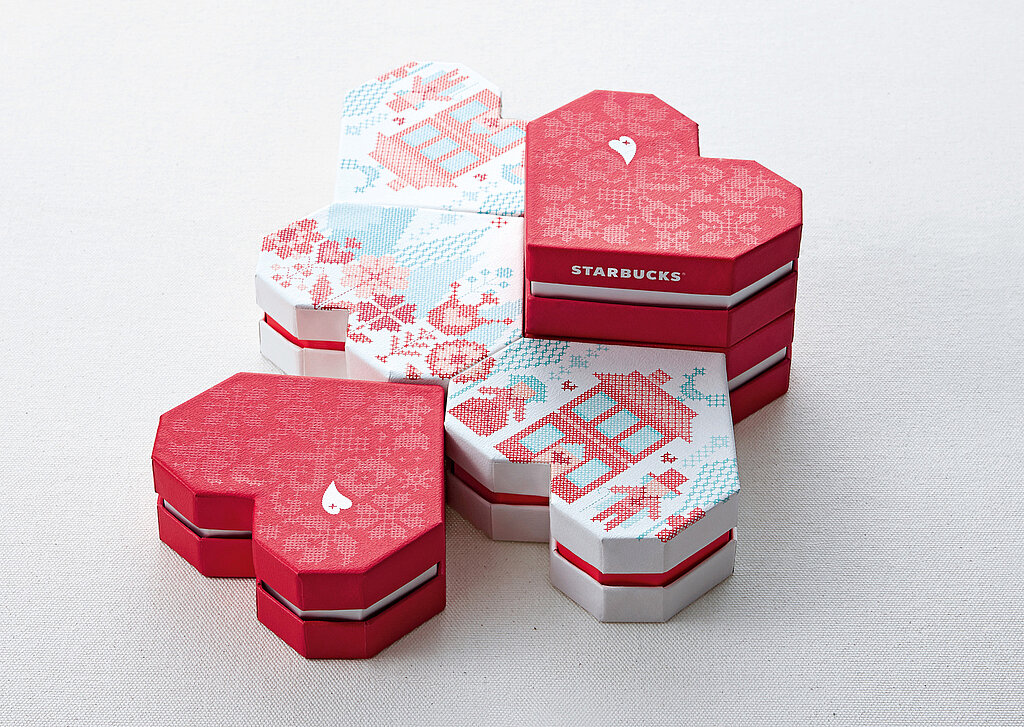
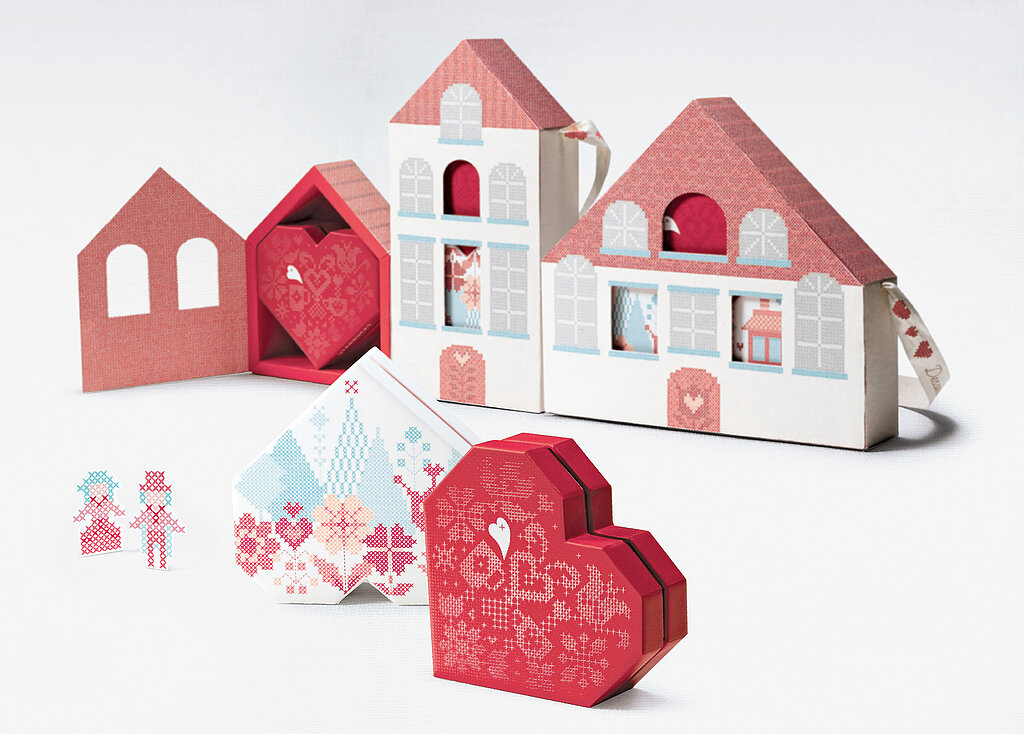
For Valentine’s Day, Starbucks Coffee Korea created chocolate packaging that honours traditional gifting while adding a modern twist: Valentine’s Day Chocolates. Outer boxes shaped like houses encase angular, cross-stitch–inspired heart boxes, with cut-out windows offering a playful preview. Embossed and spot-varnished patterns enhance tactility, and lined up, the boxes form a quaint Belgian village, reflecting the origin of the premium chocolates inside. The design combines symbolism, craftsmanship, and sensory experience, updating the familiar ritual of giving for contemporary audiences and was awarded a Red Dot in 2015.
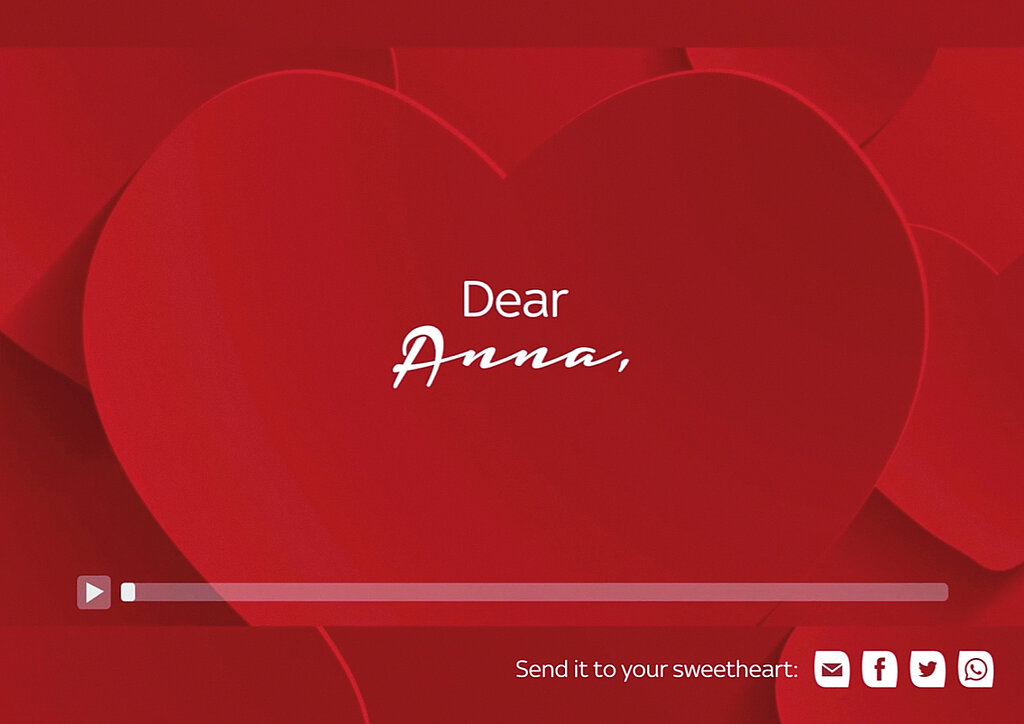
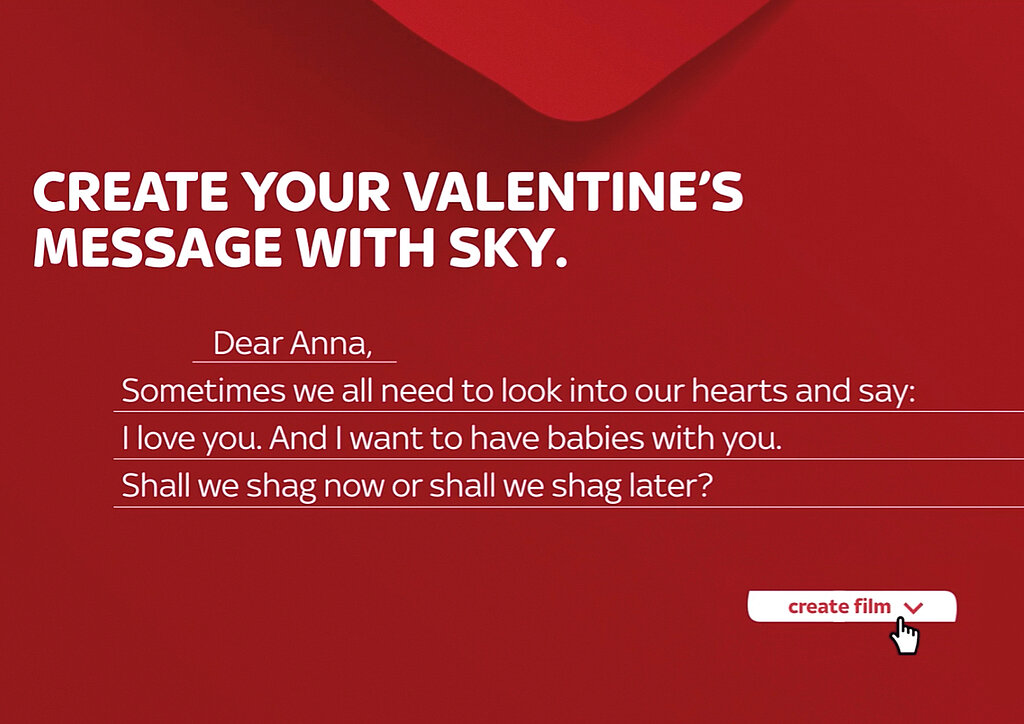
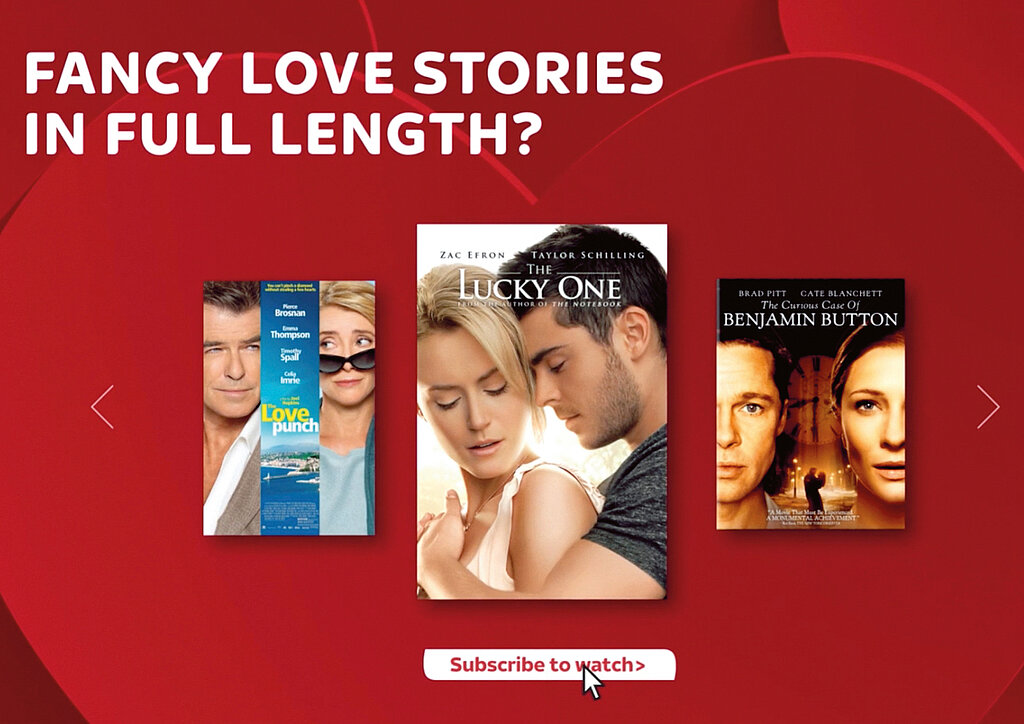
Where 19th-century Valentine’s cards relied on standardised symbols and prewritten verses, the digital campaign Say it with Sky shows how Valentine’s design has evolved. Ahead of Valentine’s Day, a dedicated website allowed users to create personal love messages from snippets of 845 romantic films. An AI tool matched lines with users’ messages, even suggesting more creative options, producing short, personalised clips combined with a Sky offer. Unlike static, mass-produced cards, the campaign turned romance into an interactive, co-created experience, showing how modern Valentine’s design can shape emotion as well as display it. The digital campaign was awarded a Red Dot in 2019.
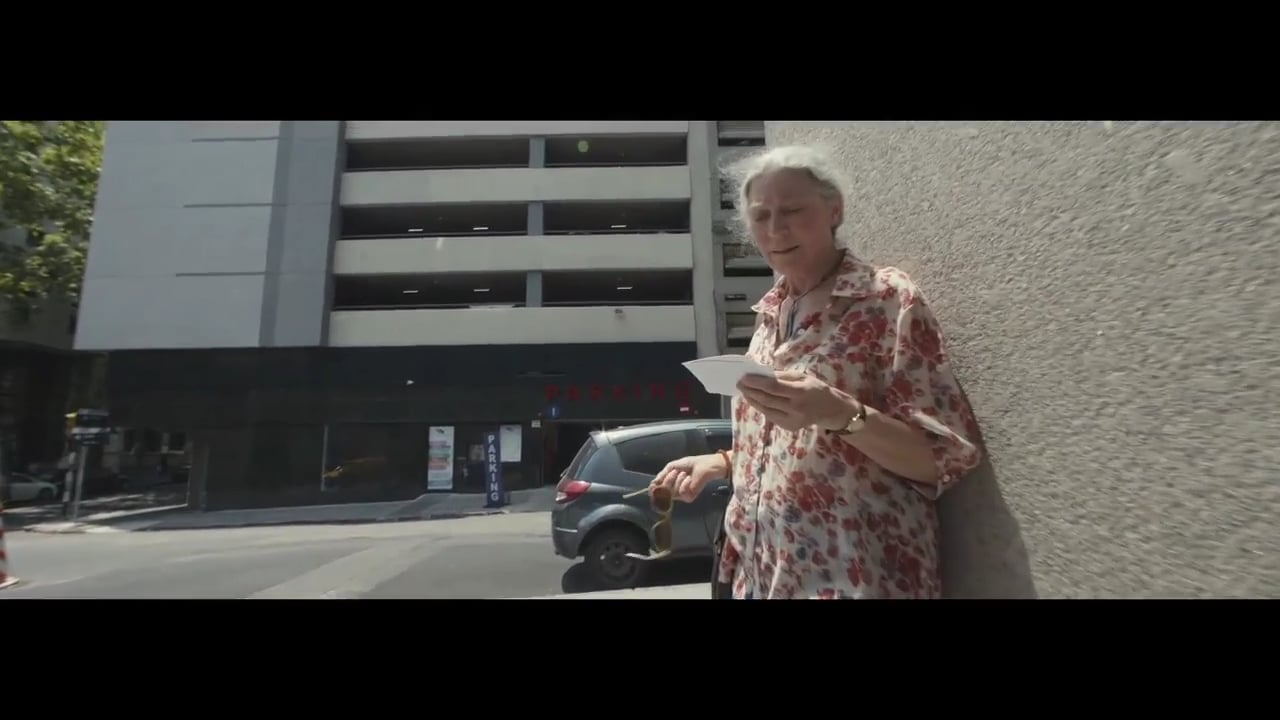
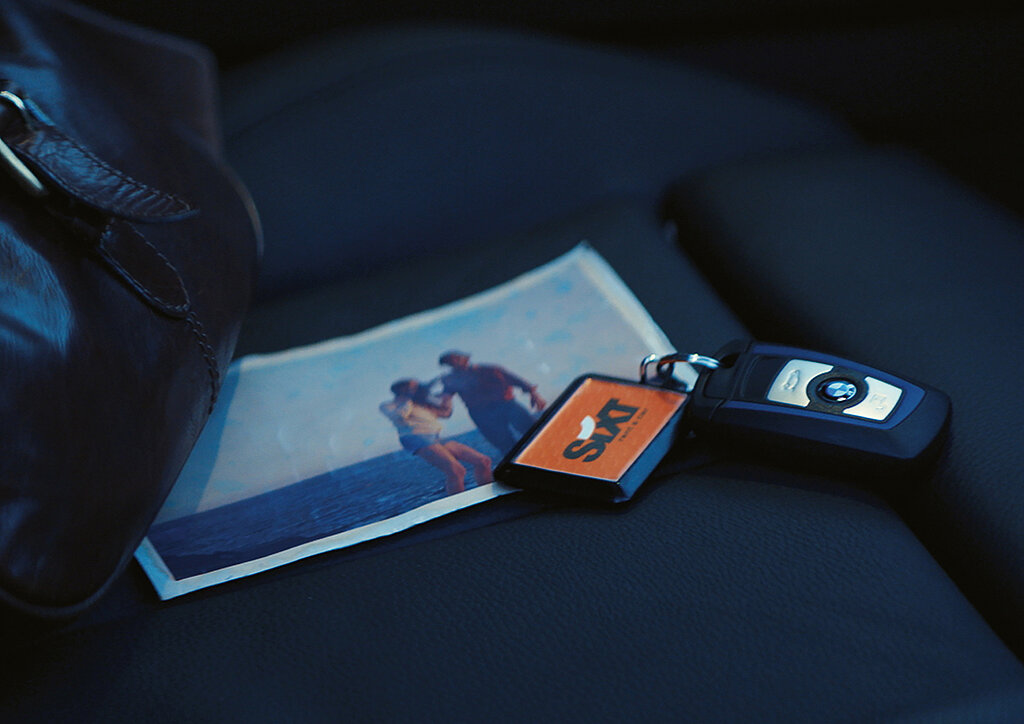
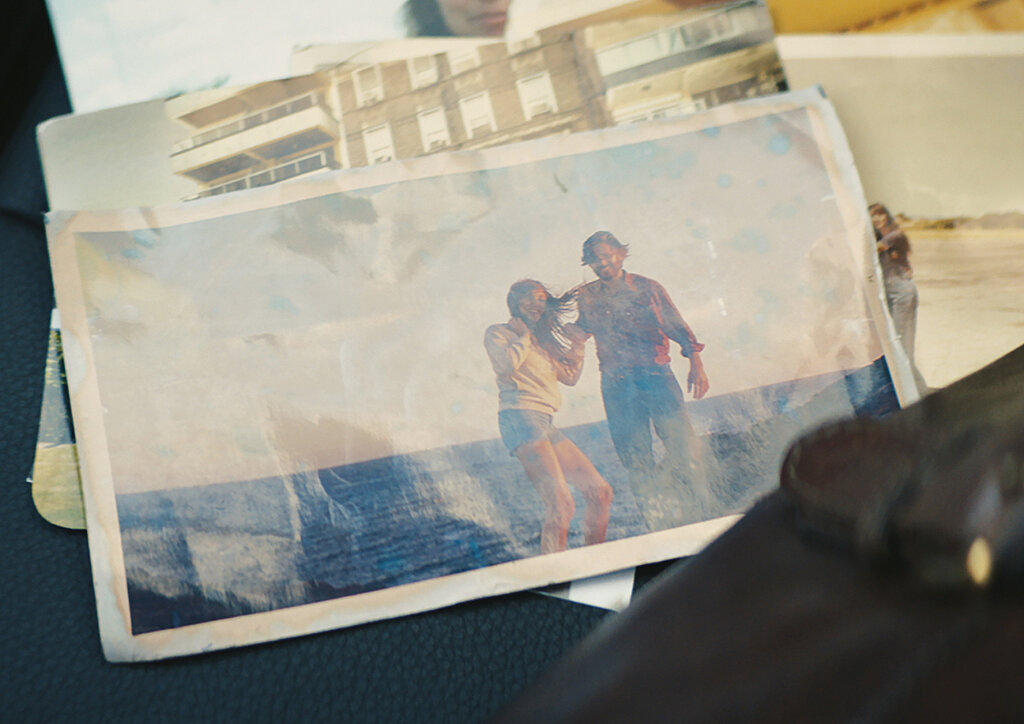
The online film “Valentine’s Fairytale” of the car rental company “Sixt”, which was awarded a Red Dot: Best of the Best in 2018, subverts traditional sentimental narratives with the brand’s characteristic humour. A woman reminisces about a past love affair on a road trip and eventually finds her former partner, Tom, who calls her by the wrong name. The unexpected ending links perfectly to the Valentine’s promotion: Sixt may not be experts in love, but they remember names and offer rental car discounts for everyone – even Toms. The jury praised the film’s storytelling and precise punch line, demonstrating how contemporary Valentine’s design thrives on tension, irony, and brand clarity rather than clichés.