Thomas Knüwer
Thomas Knüwer is Chief Creative Officer for Germany, Austria and Switzerland at Accenture Song, where he has worked with clients like Booking.com, Netflix, Google, ALDI and Zalando. Looking for ideas that go beyond category boundaries, he has developed weird things like a melting board game, a record from hell, and a search engine for small business exports.
His work received more than 140 awards and merits, including Cannes Lions, ADC and D&AD.
Beyond his creative work, Thomas’ focus at Accenture Song is on mental health and tech driven creative career paths.
Thomas started his career at Jung von Matt after studying Graphic Design. He’s an active Member of the Art Director’s Club Germany, The International Academy of Digital Arts and Sciences and has been judging at awards like ADC, Eurobest and the Webby Award. Aside from work, Thomas has published three novels and is currently writing his fourth.
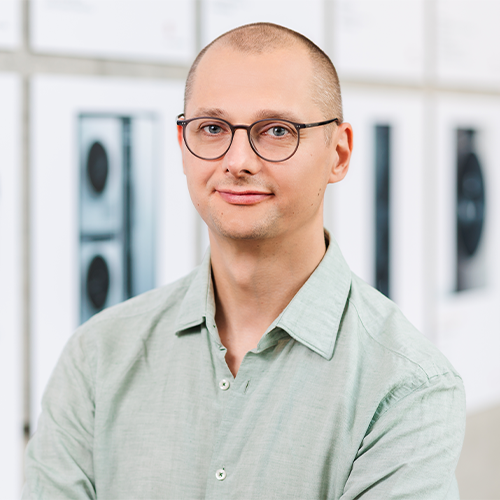
Red Dot in an interview with Thomas Knüwer
Accenture Song describes itself as a tech-powered creative group, and the first thing that comes to mind is AI. So is AI the only real game changer, or are there other technical developments driving the creative industry forward?
AI is definitely a buzzword that has been around for a while now. We tend to talk about generative AI, which is the creation of image, sound, text or video content. But there are some equally exciting developments in diagnostic, procedural and agentic AI. You also have to bear in mind that it isn’t just about integrating AI into creative processes. Actually, the opposite is true because we start out with the conscious use and analysis of data to enrich creative intuition with knowledge. Modern intercultural and international collaboration would be impossible without tools and platforms. I think the most important thing to remember is that technology shouldn’t be used for technology’s sake, but to add real value.
With some projects, it isn’t always possible to push boundaries because of time, budget or other constraints. Do the Accenture Song teams get to experiment and explore new possibilities, or do you simply lack the time?
Experimentation has always been an essential part of a creative environment. It’s important to view mistakes as opportunities for learning and growth, and to give people the space and budget for exploration. Sometimes we get hampered by tight budgets and deadlines. It’s just a reality we have to face, especially in our complex digital world. That’s why it’s so important to set priorities, i.e. to make precise and effective delivery the number-one objective when categorising projects. This means we have to communicate openly with our customers and partners right from day one. I think the majority of frustrating situations occur when expectations are not clearly communicated.
Each new generation is becoming more critical. How do companies need to communicate with them in order to get them on board?
Open communication opens minds. It’s great to see a generation of mature individuals who are insisting on social, political and economic participation. Creative service providers and brands must allow open dialogue to take place, engaging with people rather than just sending out messages. Honesty, empathy and imperfection are needed. Brands can’t simply dump messages into a community they haven’t been invited to participate in, especially on social media, where authenticity and engagement are so important. If you do that, you might as well just burn your marketing budget.
You enjoy working across different disciplines. Do you think it’s essential to be interdisciplinary these days? Do we need more generalists than specialists?
I don’t think there’s a definite yes or no to that question. There’s a lot of diversity in the creative services scene, and the “agency” concept doesn’t exist anymore. Sizes, structures, working models and specialisations vary enormously. Today’s creative agencies aren’t just competing with other creative agencies; they’re competing with social agencies, design specialists, production companies, freelancer networks, in-house and independent creators, platforms and consultancies. There’s also no definitive answer to the question of whether generalists or specialists will be needed more in the future. But the role of specialists will change. I believe that taste will be a core creative value in the future. Not in execution, but in the decision-making process. AI makes everything possible for everyone. Any brand can produce cinematic commercials, regardless of budget. But should it? That depends on taste, design and brand awareness.
Do you have the impression that the next generation of designers in this country is being trained for the challenges ahead?
To be fair, I believe that current technical and cultural developments are moving so fast that the education sector can barely keep up. That’s why I think it’s important to train the mindset rather than the skillset of young talents. People who prioritise being open-minded, curious, empathetic and proactive and who apply these qualities to everything they do will be more successful in the long term than people who specialise, for example, in prompt engineering. Knowledge may change, but the ability to absorb new knowledge like a sponge doesn’t.
To what extent are design awards like the Red Dot important for the creative industry?
Awards are an important benchmark of creative achievements, but only if they have the necessary clout and if they are independent and content-driven rather than commercial. Awards are based on trust. It has to be obvious that the decision-making process is clear, transparent, professional and critical. And the decisions should be made by experts with the ability to evaluate the quality and excellence of a work. That’s the case with Red Dot. In the jury sessions, all the judges showed a great appreciation for design. Bringing together such experienced creatives from all over the world allowed us not only to have passionate discussions but also to address cultural blind spots.
You’ve already authored three novels – is this a way for you to experience a different kind of creativity, or are there parallels with your agency work?
Yes, of course, there are parallels that I apply to both writing and designing: for example, ideation processes, consistent storytelling and the importance of simplicity and clarity when engaging with your audience’s emotions. But when I write, I can give my creativity free rein. My novels are dark and suspenseful. I love delving into the human psyche, and I even weave my own fears into my writing. It makes my creativity as an author rawer and more unfiltered. That’s why I love doing it.