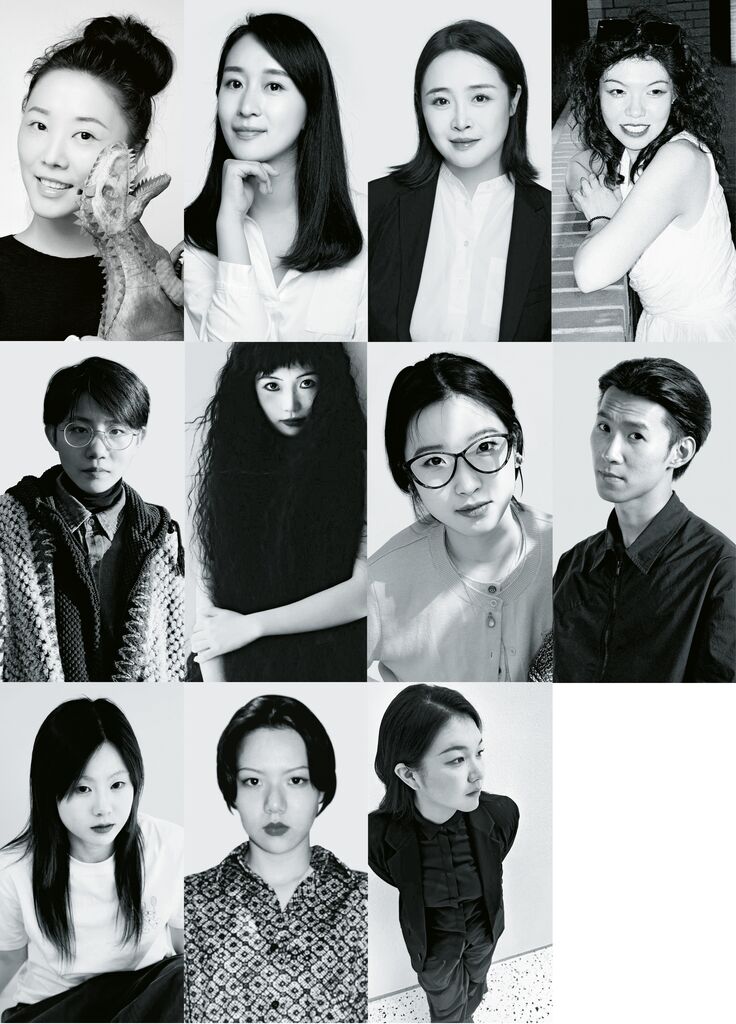

Interview with A.S. Strategy, Branding & Communication - Antonia Skaraki
To underpin Hangzhou’s bid to become the World Design Capital, an extraordinary volume was created in just three months, combining the past and present of the city in an expressive portrait. The interdisciplinary team placed silk as a defining element of local craftsmanship at the centre of the haptic implementation. With an unusual format, a varied visual language and precise production, they succeeded in impressively capturing the character of Hangzhou.
Red Dot: What inspired you to undertake this book project?
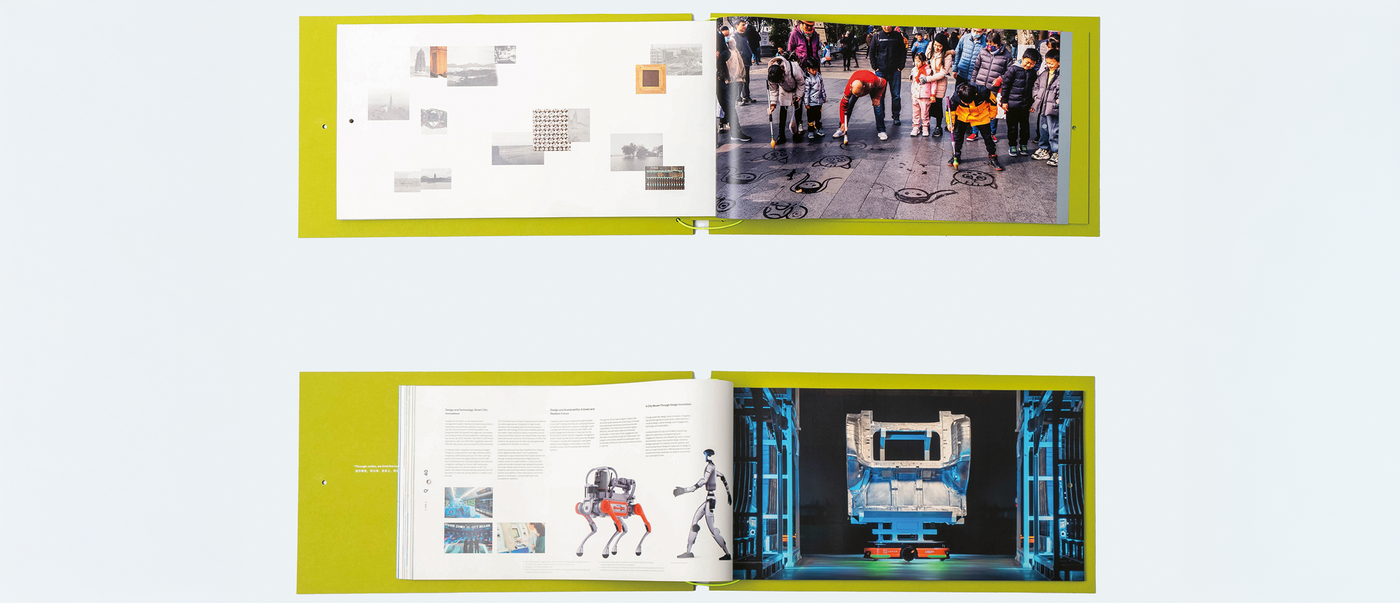
The idea was born when Hangzhou applied for the title of World Design Capital: “Fabric City / Open Silkware / Unbound Design.” With a 5,000-year-old civilisation and 3,000 years of silk craftsmanship, silk is more than just a material here – it is a cultural metaphor. Under the guidance of Professor Huang Sunquan and his team at the China Academy of Art, we set out to make the application book a tangible design work. It was conceived as a “portable Hangzhou”, bringing together the city’s landscapes, craftsmanship, digital innovation and ethos of open, shared design. It was intended as a cultural statement. The form is an integral part of the content. The long horizontal layout with axial hand-stitch binding resembles continuous landscape scroll paintings. When opened, lakes, mountains and gardens flow seamlessly across the pages; when closed, the central axis gathers the work like an ancient scroll.
You have highlighted the city’s significant textile industry in a tactile way. Can you explain this reference in more detail?
Silk is the defining cultural emblem of Hangzhou. For the book’s inside pages, we chose the silk satin “Four Seasons of Lin’an” from the Cathaya brand, which is produced using the world’s most advanced “Butterfly Satin AI Jacquard Weaving Technology” and produces millions of weave points per square metre. This technology wove the painting “Landscape of Four Seasons” by the Song dynasty artist Liu Songnian into silk, making the city’s lakes and mountains ripple beneath the fingertips.
What challenges did you face in terms of concept and production?
The biggest challenge was to balance historical depth with contemporary vitality. This was only possible through close collaboration with Hangzhou’s local silk brand Cathaya and with the type design studio Quinsay Design. This approach allowed traditional techniques to be combined with the latest digital weaving technology, and the structure of Latin letterforms with the brush strength of Eastern calligraphy. Every detail was crafted to reflect Hangzhou’s design intelligence and creative prowess.
What was your approach to using illustrations and photography?
Illustrations serve as “annotations” on the city and are deliberately stylised to combine reality and cultural interpretation. The photographs by Yan Fei and his father Yan Xiang document architecture, spaces and events. In some sections, we have also woven in elements from historical paintings. This three-layered structure – antique paintings, illustration, photography – creates a temporal tension and allows the reader to switch between history and the present, reality and representation, so as to experience the unique character of Hangzhou.

