


Interview with Ju Chan Ho for +CLOCK
Terracotta Valley Wind is among the top five projects nominated for the top prize, the Red Dot: Luminary at the Red Dot Award: Design Concept. It is selected among the Red Dot: Best of the Best winners, and serves as an inspiration to aspire towards. The Red Dot: Best of the Best winning concept from Sustainability category is designed to provide a passive cooling system for subway stations during the summer. By making use of the induced wind from arriving or departing subway trains, the station can be cooled down in a natural and low carbon way, eliminating the need for air-conditioning and reducing energy consumption.
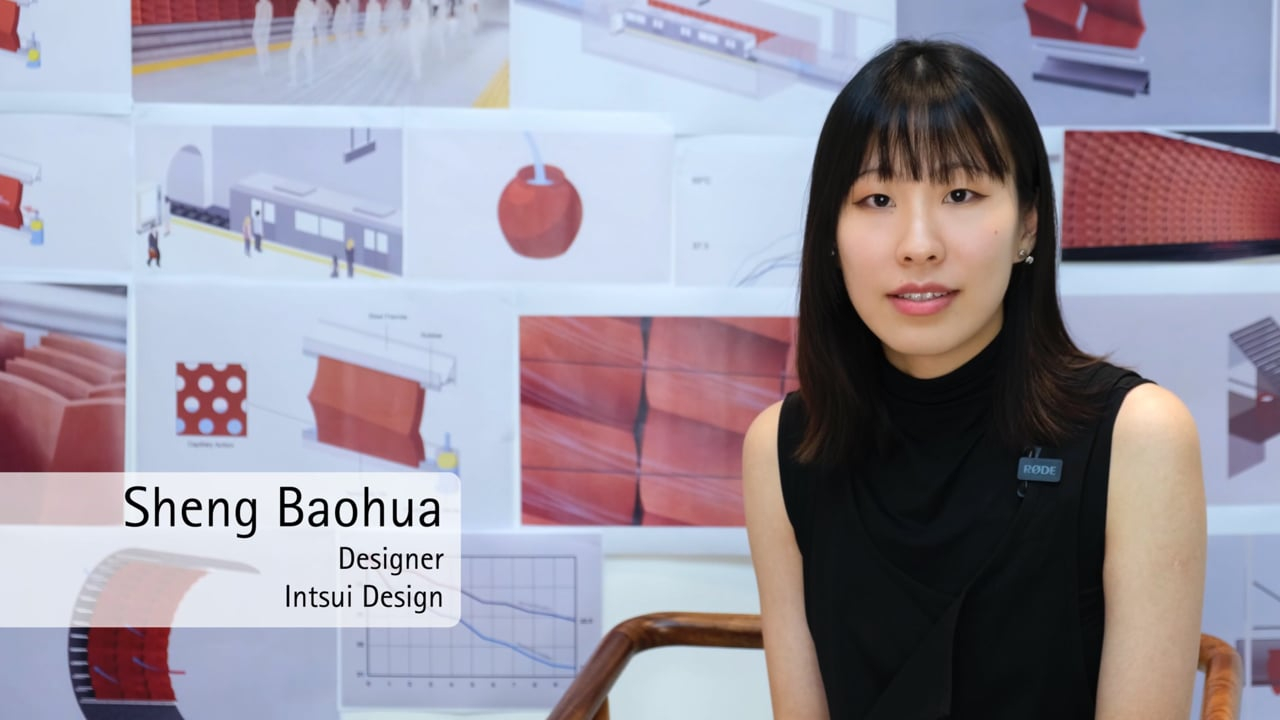
We are Intsui Design from China. We recently graduated with a master's degree in Integrated Design from Tama Art University in Japan. We like to explore the relationship between subconscious human behaviours and design. Therefore our design practice usually focuses on people’s intuition and natural responses to objects and the environment.
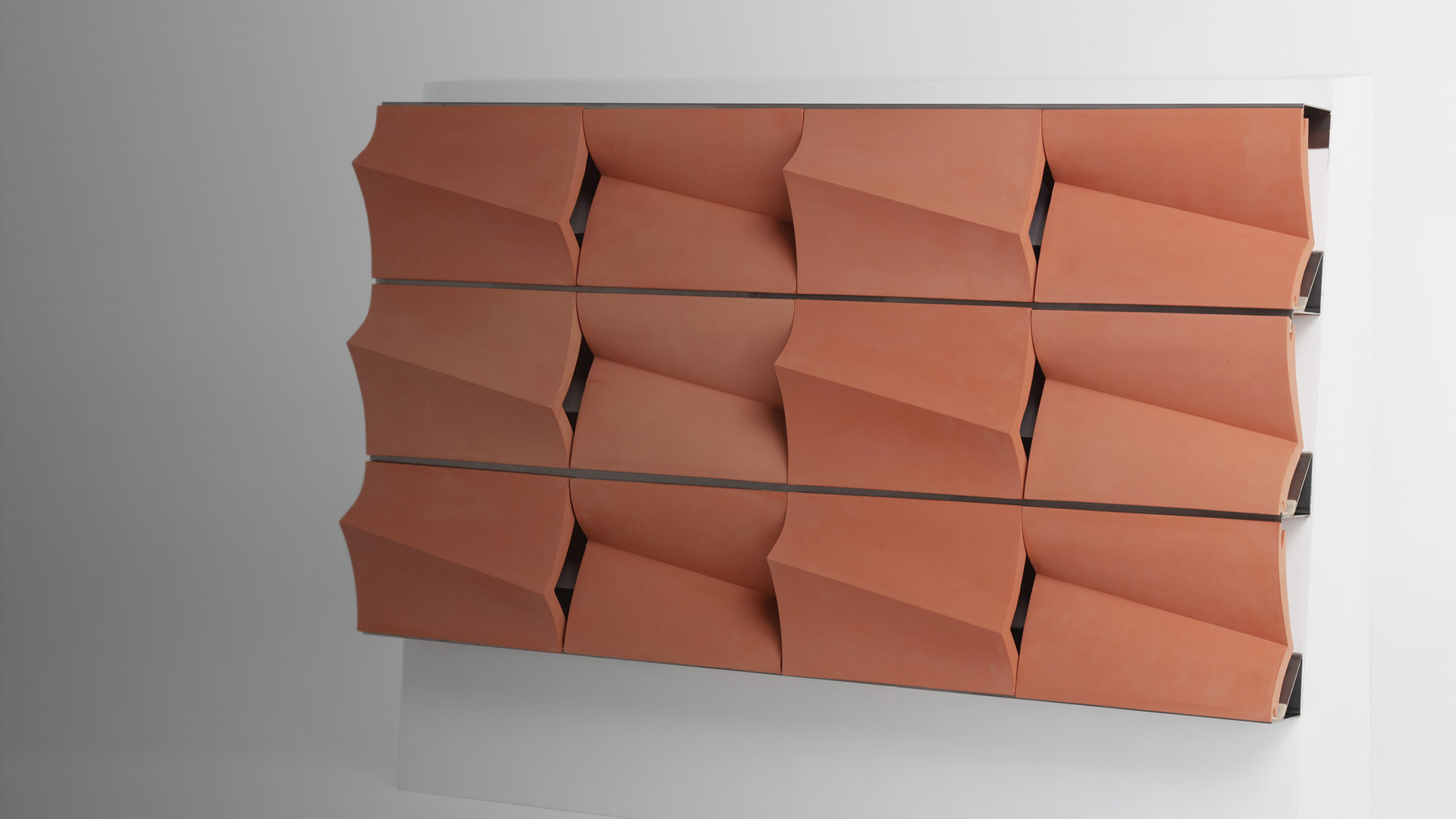
Terracotta Valley Wind is a terracotta evaporative cooling system. It cools down the subway station in summer and effectively alleviates the heat problem caused by lights, facilities, trains, and crowds, releasing the burden of energy consumption.
Terracotta is a cheap and accessible clay material. Its nature allows water to quickly evaporate while maximising the value of train-induced wind, which is an unused wind resource in subway stations.
While developing this project, we have researched a lot of ancient methods of cooling. For example, in the Middle East people use the combination of terracotta pots filled with water and special architectural structure to cool down the interior. These ancient wisdoms can still bring us a lot of inspiration today.
Zhang Yu:Firstly, the shape of the terracotta tiles was designed to guide the train-induced wind. Therefore, the airflow is able to exchange cold and heat in the subway station in an ideal path.
Secondly, the design of positive and negative tile units increases the contact area with the wind and improves the cooling efficiency.
Lastly, the design of the modular structure makes it easy to transport and construct.
Red Dot Award: Design Concept 2026
Registration phases:
Entire registration period: 1 December 2025 – 29 April 2026
Early Submission 1 December 2025 – 21 January 2026
Standard Submission 22 January 2026 – 18 March 2026
Late Submission 19 March 2026 – 29 April 2026
For further information, visit: www.red-dot.org/design-concept
Register and submit at dc.red-dot.sg

