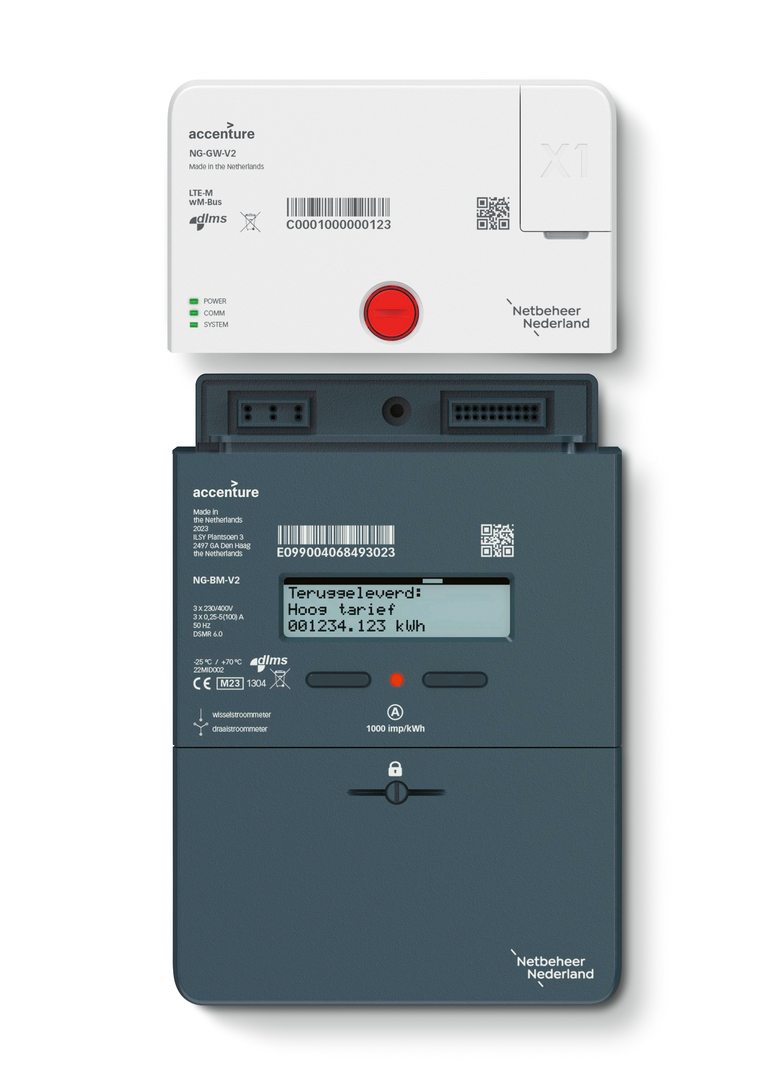
Absolutely crucial to the energy transition is the digital transformation of the energy sector. As the proportion of renewable energies increases and is accompanied by their decentralised feed-in – for example via privately owned photovoltaic installations – so the demands on flexible, secure and efficient power grid operation are growing. Thanks to their communication interface, smart meters provide quasi real-time transmission of consumption and generation data so local electricity grids can be used more efficiently. The NextGen smart meter was developed as a result of the need to offer a solution for the evolving energy landscape that is as sustainable and future-proof as possible. To counteract the problem of technological obsolescence, the product combines a digital meter with an upgradable and replaceable communication gateway. Separation of the operating system and application layer permits seamless software upgrades, while hardware upgrades are simplified by the fact that the gateway can be removed and replaced as a separate component by the users themselves. Thanks to this sophisticated product architecture, the NextGen smart meter has a service life of 25 years and simultaneously paves the way for circular models in energy metering. The product’s shape also incorporates resource conservation, with the housing designed to correspond to the space taken up by currently available single-phase meters. This not only minimises the effort required but also the amount of material needed for the installation of the smart meter. The slimmed-down, clean design is furthermore exceptionally user-friendly: the meter and communication gateway can be clearly distinguished from each other thanks to their contrasting colours, and can easily be separated by the user with the help of a red screw – all that it takes is a coin. “The NextGen smart meter is a product which has been thoroughly adapted to the needs arising from the energy crisis and contributes to a sustainable energy supply in a changing world,” is how the jury put it. “The design is universal and well-proportioned – and perfectly mirrors the functionality of the product.”