
Interview with Lea Bagi
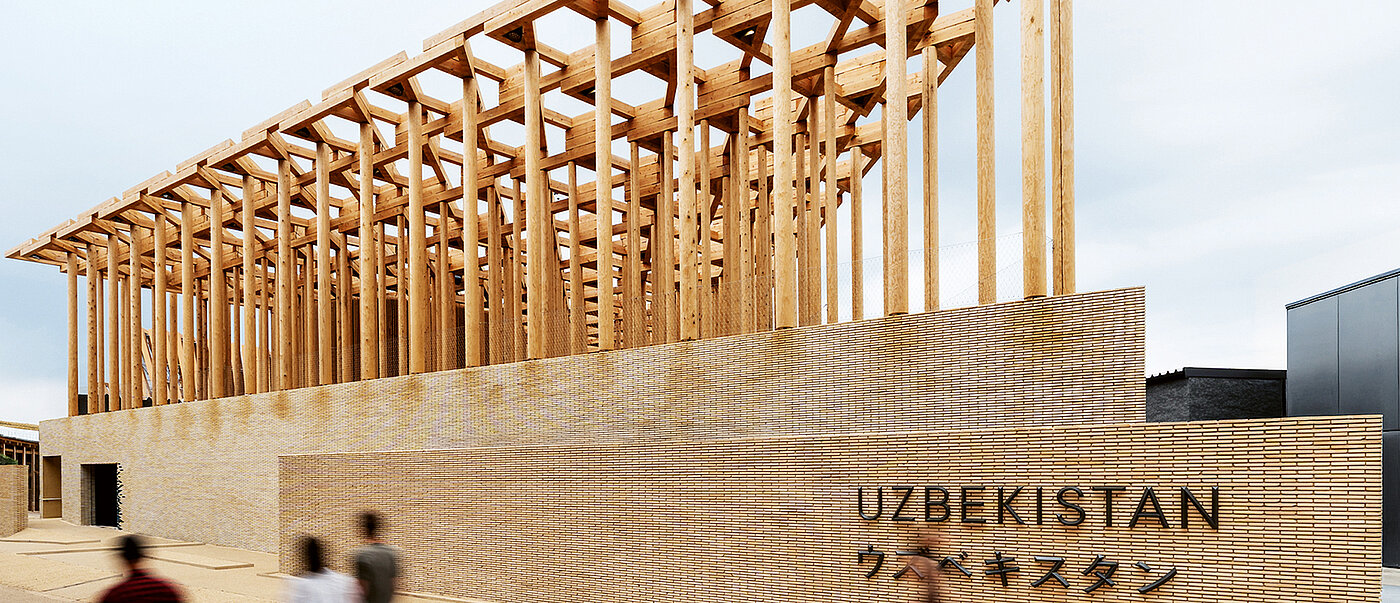
The Uzbekistan Pavilion at Expo 2025 in Osaka enabled visitors to explore both the country’s cultural wealth and its future prospects. ATELIER BRÜCKNER’s declared aim was not only to talk about identity and transformation, but also to make these stories tangible. The sensitive handling of materiality and multimedia expertise merged to create an impressive experiential space that was also designed to be sustainable.
Red Dot: What surprised you most when diving into the content for the pavilion?
We were particularly fascinated by the rich and diverse nature and culture of Uzbekistan. The country combines deserts, steppes, forests and majestic mountain landscapes. The traditional craftsmanship is also impressive. Materials such as clay, stone, tiles and wood are deeply rooted in architecture and art along the Silk Road. The cultural bridge between Uzbekistan and Japan was particularly exciting. In both countries, craftsmanship is highly valued, as is the connection between building culture and spirituality. Discovering these parallels was an important source of inspiration for the pavilion.
You were inspired by traditional Uzbek mosques and harmonise them with multimedia elements. Was building this bridge challenging?
At ATELIER BRÜCKNER, we work according to the philosophy “form follows content”. So we start with the content and then develop the spatial experience from there. With the Uzbekistan Pavilion, we didn’t just want to show the past; we also aimed to make tangible how tradition can give rise to innovation and the future. It’s the interplay of handcrafted details, clear architecture and modern media technology that makes this place a moving experience. Our aim was to create a holistic, sensual world in which the identity of Uzbekistan unfolds spatially and emotionally.
The pavilion was designed to be sustainable. What materials were used?
Sustainability was a key concern right from the start – not only technically, but also culturally. We worked with natural, locally available and reusable materials: wood from the Osaka region, clay and doma from the island of Awaji, recycled bricks from Japan and ceramics from Bukhara in Uzbekistan. The entire building follows a modular design – inspired by the Juma Mosque with its wooden columns and recessed ceiling elements. After the Expo, the pavilion will be rebuilt in the Uzbek city of Nukus, where it will serve as a children’s library and community hub. In this way, we combine temporary architecture with a long-term vision.
What do you generally see as the greatest benefit of a spatial experience?
Spaces have the power to reach people emotionally. Unlike traditional media, spatial experiences create a direct connection. You become part of a story – with all your senses. Our task as designers is to translate complex content into atmospheric, intuitive experiences. Materiality, light, architecture and staging make the message not only visible but also tangible.

