
Interview with 3st kommunikation
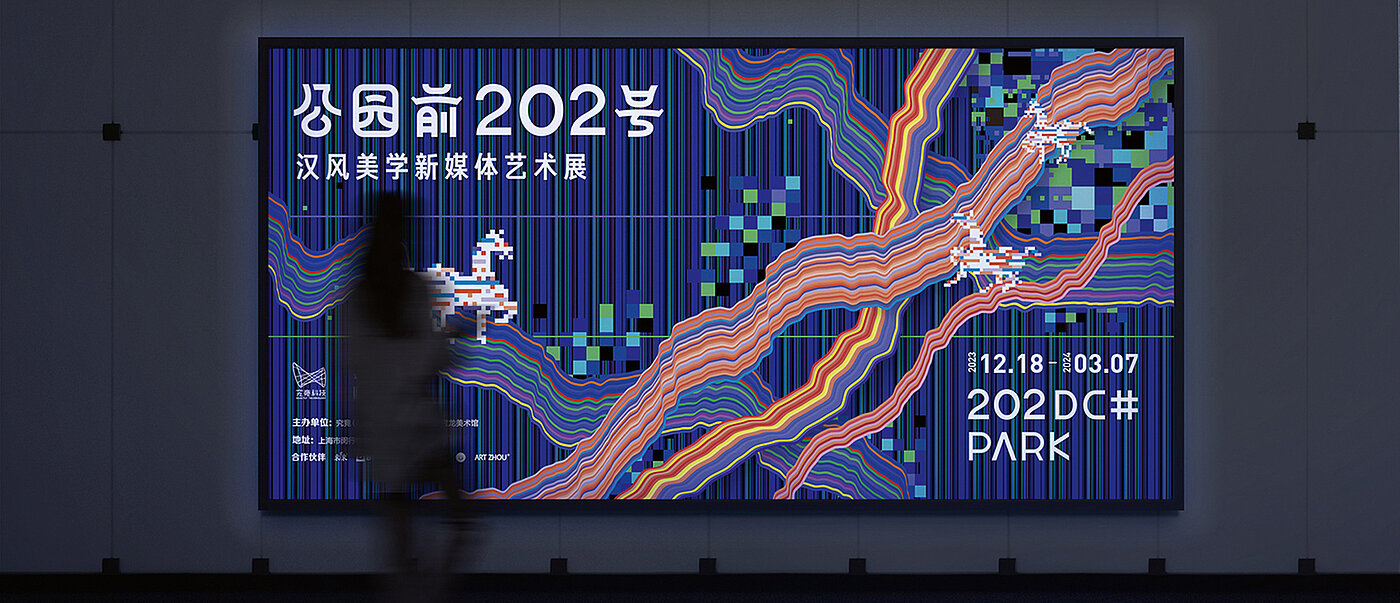
A team from academia and industry spent two years researching the stone reliefs of the Han dynasty before creating a mobile exhibition and a brand identity that reinterprets the artworks, including their motifs and narrative logic, in a contemporary way. The resulting immersive exhibition experience employs modern design to give contemporary audiences a tangible experience of this era’s relevance.
Red Dot: What exactly was your role in this project?
We were tasked with creating a cross-media exhibition to showcase the beauty of the Han style, to give ancient culture modern-day relevance, to orchestrate a special experience with modern technology and to build a brand. We translated the symbols featured on the stone reliefs, paintwork and tiles into a contemporary visual language. By using pixel-oriented dynamic visualisation techniques, we were able to replicate the Han dynasty aesthetics in a digital media environment.
Why did you opt for a pixelated look?
The focus here was on a digital presentation, so pixels naturally corresponded with the technology. A formal language featuring colour blocks also dissolves the distance to the artefacts and transforms the historical charm of the stone reliefs into visual symbols that are more comprehensible to contemporary audiences. The Han dynasty reliefs are, in fact, also based on a modular system that involved craftspeople creating patterns on individual stones and then joining them together to tell stories with images. This logic of compiling individual parts to create a whole is also an aspect of pixel art.
How did the Han dynasty aesthetics influence other design decisions?
Although the colour system has been adapted for screens, it is based on the earthy pigments of the reliefs, and the main colours reflect the black-and-white depictions on lacquer work and wall paintings. We translated the flowing energy that is visible in many of the motifs, such as galloping horses, into a dynamic narrative, with content modules forming entire stories to create a recognisable hierarchy and to make the information easier to read.
How has working on this project changed your own perspective?
Our mission was to bring the culture of the Han dynasty to life. But the more we immersed ourselves in the history and aesthetics, the more we realised how much vitality this culture had. There is a direct connection between our ancient ancestors’ ideas about life, nature and the universe and the desire of modern-day individuals to explore the world.

