

Interview with Team Layher
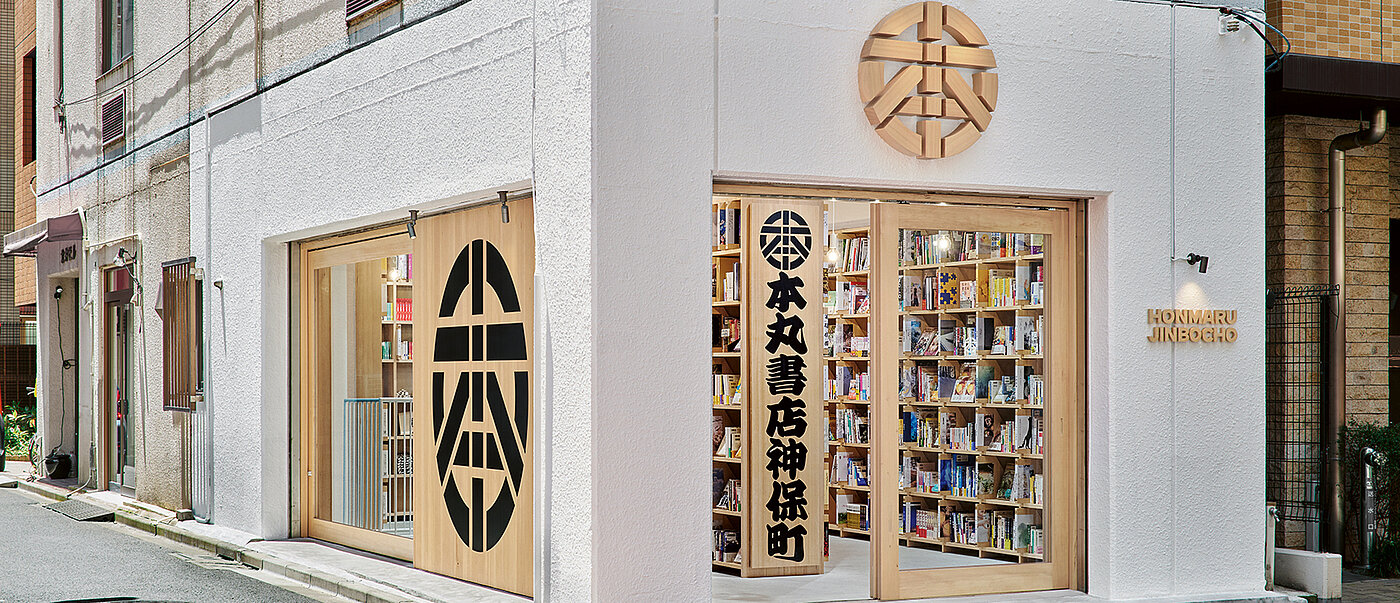
Bookstores can be serendipitous places where wonderful discoveries are often made by chance. Japanese author Shogo Imamura and designer Kashiwa Sato teamed up to reinvent the bookstore under the name “HONMARU”. They conceived it as a spatial experience for book-loving individuals that elevates traditional motifs into contemporary design – presenting books in a curated and surprising way.
Red Dot: Why do bookstores still have value today?
The decline in bookstores can largely be attributed to e-books and the widespread use of smartphones and social media, which means that people have less time to read. Underlying this is a value system that prioritises speed and efficiency in accessing information. However, we believe that the appeal of bookstores lies in the chance encounters with books that open doors to unexpected worlds – an experience that deserves to be recognised for its positive social impact.
To what extent does the concept of community play an important role for you?
We find inspiration in social issues. HONMARU is a kind of shared bookstore where anyone can become a bookseller by renting a shelf. Individuals, publishers and authors present selections of titles that reflect their own specific perspectives. Instead of being organised by genre, the books are arranged on more than 300 individually curated shelves. This creates a dynamic space where customers constantly encounter books that surprise them.
Your philosophy is that every element should function as a communication medium. How did you achieve that here?
Everything is consistently designed, from the logo and product design to the spatial experience. The name combines the words “Hon” (book) and “Maru” (circle), and the logo visualises this concept. Traditional Japanese elements are combined to create a powerful and memorable visual identity. The uniforms are inspired by the traditional Japanese happi coat, while furoshiki-inspired scarves and stationery have been reimagined in modern forms. HONMARU visually expresses the joy of unexpected intellectual discovery.
What was special about working on this project?
We hope this initiative will contribute to passing on bookstore culture to future generations. People interact on equal terms at HONMARU, and the boundaries between book providers and readers are blurred. This open and dynamic community has given the small space unimagined potential and the power to spark new ideas through books.

