Interview with nnnnnnn. | OMG Hong Kong
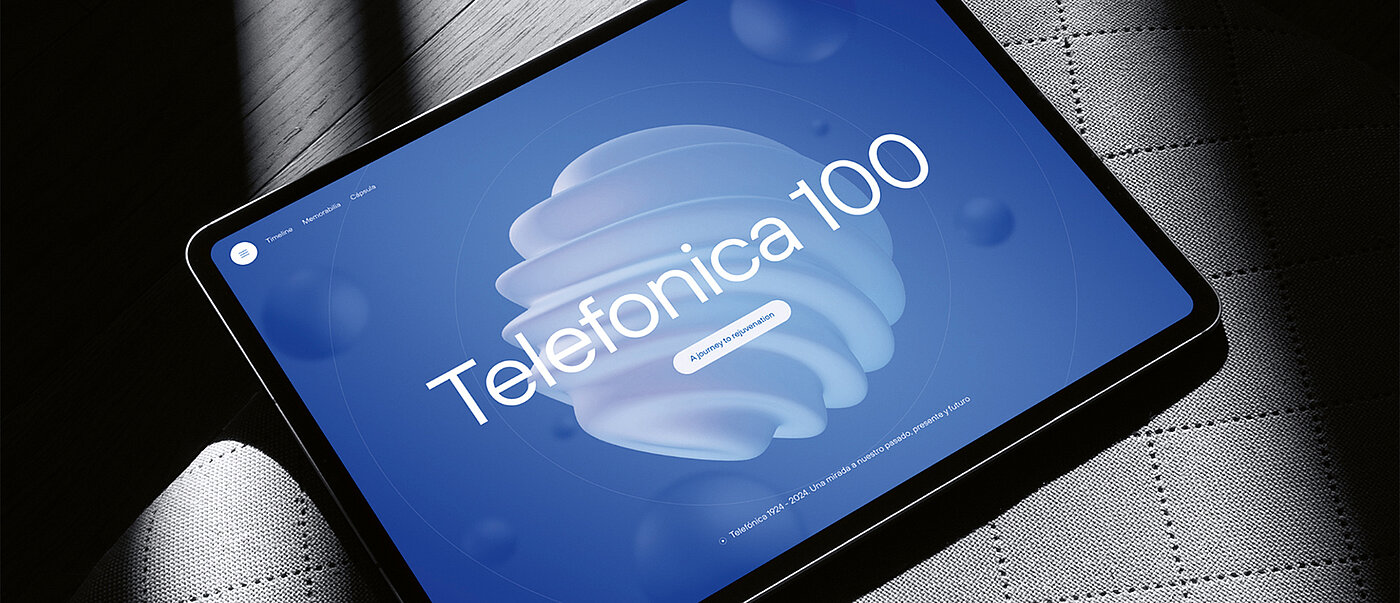
Telefónica is a Spanish institution credited with bringing the telephone, the internet and many other innovations to the country. In celebration of the company’s 100th anniversary, Hanzo’s creative team delved deep into the archives, using over 60,000 artefacts to create an immersive digital retrospective that tells the story of how innovation has always been a part of the brand.
Red Dot: You had to process a lot of material and information in this project. What design concept did you ultimately come up with?
We based the entire concept around time travel. Our aim was to resolve the apparent contradiction of celebrating Telefónica’s past achievements while underlining its role as a forward-looking pioneer. Users can immerse themselves in a “time tunnel” that enables them to explore both the past and the future. The journey through time inside the tunnel is emphasised by a blue colour scheme that gradually evolves from a darkish shade into the blue that embodies the Telefónica brand identity today. We selected 15 items from the Telefónica archive for each year. Integrating the many different images into the three-dimensional tunnel while maintaining the platform’s visual coherence turned out to be quite a complex undertaking.
How does the immersive experience you created work?
Visual depth, light and movement guide the user through the tunnel narrative. We used WebGL to create an experiential environment with custom shaders and materials, so that each of the sections had a tactile and almost cinematic look and feel. Creating a sense of real depth was a challenge. We were keen not just to create a timeline, but to combine curated editorial elements with visualisation art and immersive storytelling.
From a technical perspective the project was very demanding, so how did you manage to maintain high-quality design?
This was a deeply collaborative process between the design and development teams. 3D rendering in real time made it necessary to precisely coordinate colour, light and motion. We developed a UI tool that boosted creative autonomy by allowing the designers to directly edit materials, lighting and positions.
What was special about working on this project?
Whereas most platforms might rely on video, Telefónica 100 took a leap forward by embracing real-time rendering with edge computing, achieving seamless and responsive performance without compromising on quality. The result is a testament to what happens when excellent design meets technical innovation.