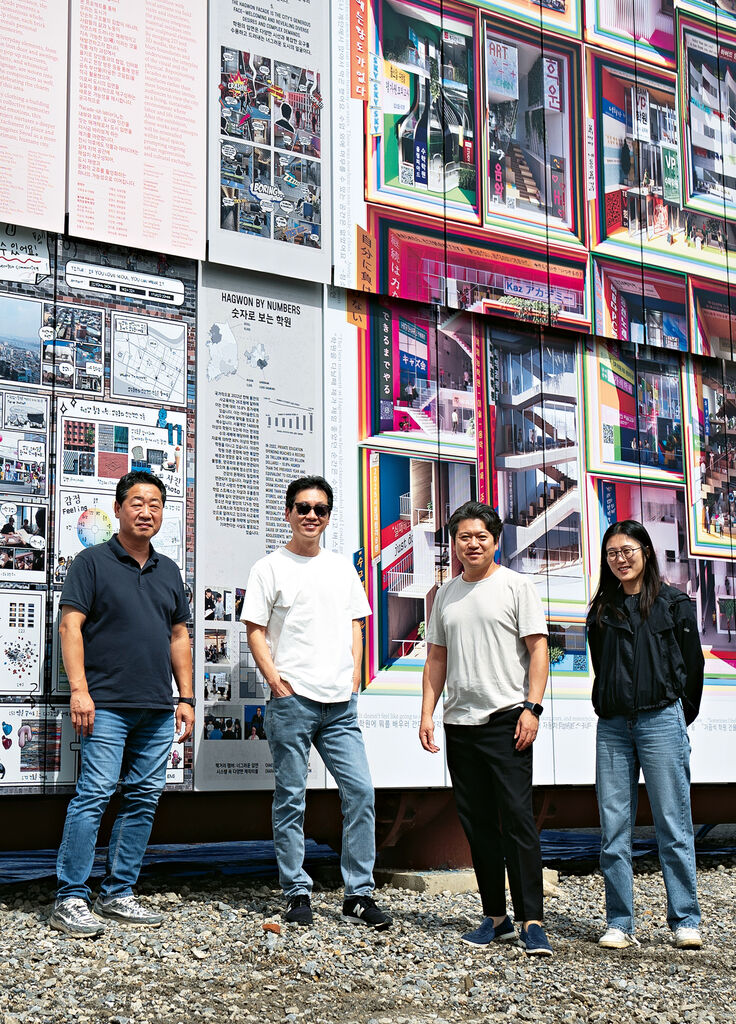

Interview with Hanzo
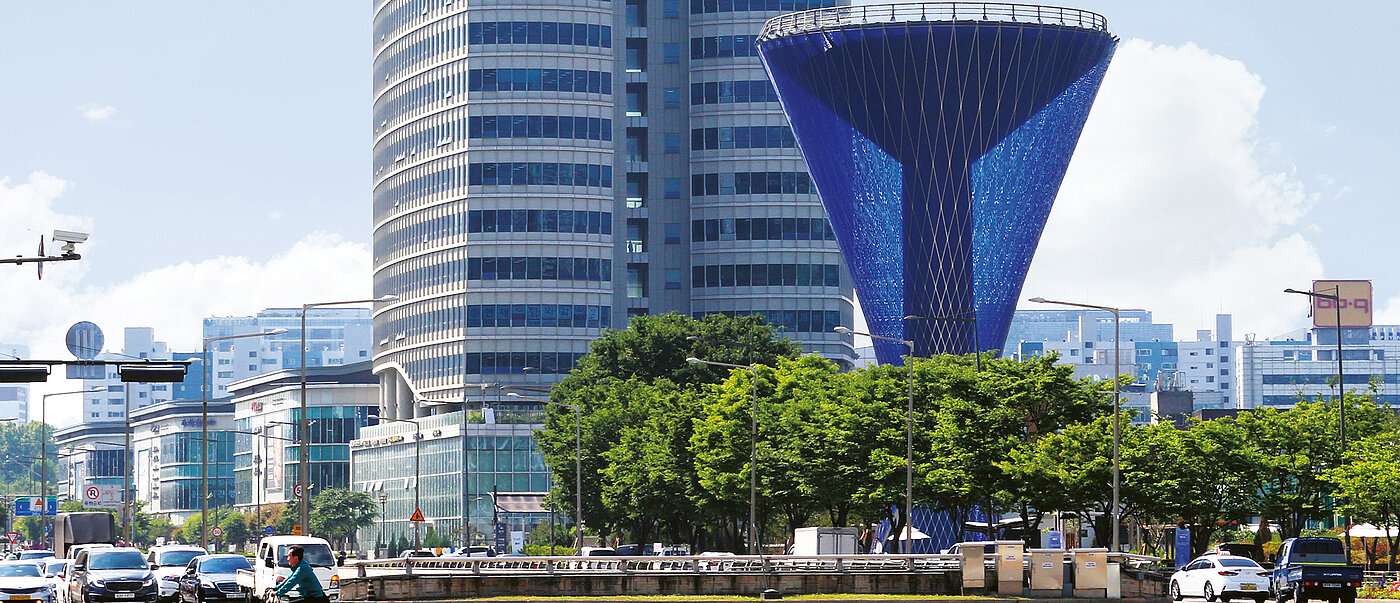
The decommissioning of a former water tower offered Seoul a unique opportunity for an innovative urban regeneration project. As specialists in creative solutions for public spaces, THE allim – working in collaboration with the American environmental designer Ned Kahn – transformed the iconic structure into an urban art space, establishing a striking new landmark for the city.
Red Dot: You have transformed a former water tower into an impressive work of public art. How did this project develop?
This water tower was built in 1986 and then decommissioned in 2004, thus losing its original function. Our aim was to transform this space into an urban art sanctuary that reflects both its historical significance and its unique location. The Rain Veil design by the American artist Ned Kahn was selected in an international competition. At 32 metres high and 20 metres in diameter, the jointly realised work is the largest public art project of its kind in Seoul. It consists of 330,346 bio-based plastic elements (4 × 5 cm each), made from renewable raw materials such as corn. Their assembly on the large structure required precise structural analysis and wind load evaluation, as well as close collaboration with experts. One particular challenge was to maintain the curved shape of the artwork, which required many fine adjustments.
Can you tell us a little about its external appearance?
The artist sees water as the source of all life and as a precious resource. The countless plastic elements now form what is called a Rain Veil, which reflects the light and flutters in the wind. By transforming the solid concrete structure into a form that flows like liquid or air, this project offers citizens a fresh and intense way to experience the urban landscape.
Sustainability was an important aspect, wasn’t it?
Sustainability was a core value. In addition to the competition, there was also a lecture programme on “Sustainability in Public Art” and a citizens’ project on rising sea levels. Ned Kahn, known for his research on environmental awareness and sustainability in public art, was chosen to continue this trajectory with the Rain Veil.
The residents of Seoul were also actively involved in the interior design …
Yes, to return the tower to the public, its previously inaccessible interior was opened up. Together with 100 local citizens, the artwork “Time of the Sea” was made. It featured six shades of colour, each representing a different ocean depth, giving rise to a structure seven metres high. As a cross-section of the sea, it symbolises climate change, vulnerability and shared responsibility. But the water tower project goes beyond a simple public art initiative. From an urban regeneration perspective, it reimagines a disused piece of infrastructure by involving the community and inviting their participation. Together with the newly developed park, this resulted in a public meeting place for residents and also for Garak Market vendors. The project revitalises the neighbourhood and turns the tower into a landmark, while also fostering a public space where communication and culture coexist.

