

Interview with Fuenfwerken
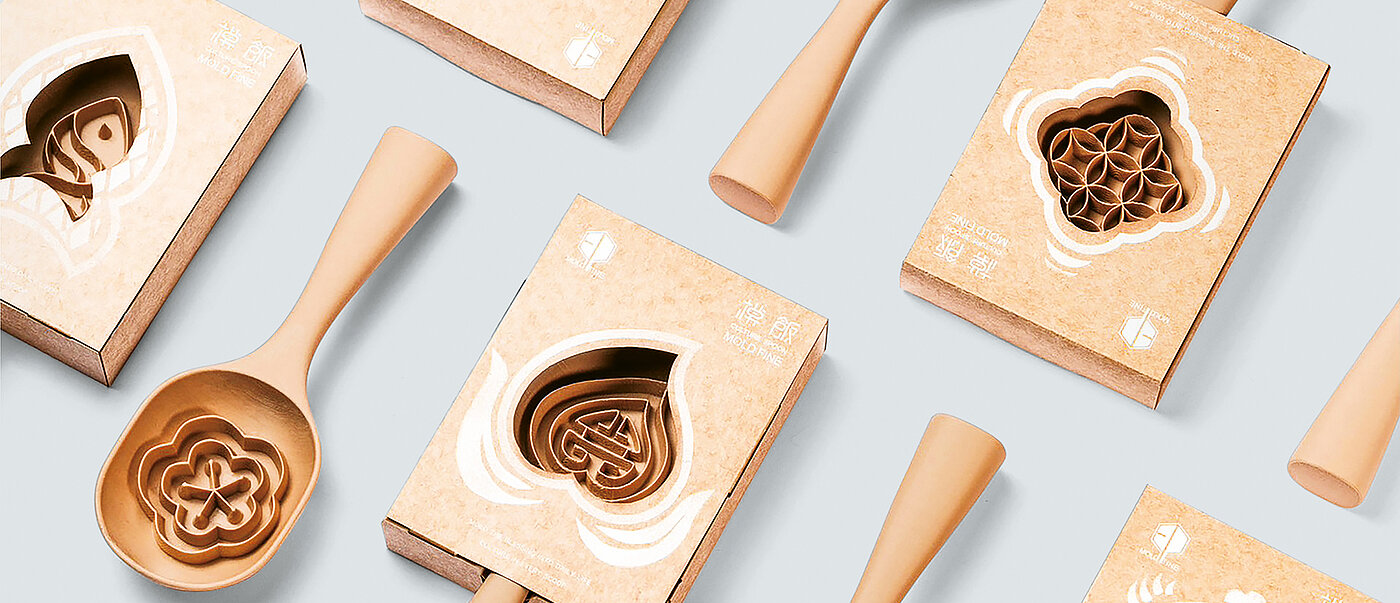
Rice cake moulds are more than just household utensils in Taiwan – they are vessels of blessings and symbols of longevity, prosperity and good fortune. The Cultural Rice Scoop project reinterprets traditional forms and adapts them for modern cuisine. Sustainability played a major role in the development of the product, as did the desire to reconnect people with their cultural roots.
Red Dot: You’ve imagined rice cake moulds in a new way. What was your intention?
The design was inspired by my childhood with my grandparents, when rice cakes were both a beloved snack and an offering to deities. However, in this project we focused on people rather than on the religious aspect. Our goal was to preserve the spirit of the tradition, while reinterpreting it into an object that is part of daily life. This allowed us to recreate a ritual once reserved for festive occasions, giving it a new form that can be seamlessly integrated into everyday living.
To what extent will your product change people’s daily lives or the way they engage with food?
In Asian cultures, this design transforms the act of serving rice into an emotional and ceremonial dining experience. Imprinting blessings onto the food creates a moment of reflection and appreciation before eating, and this adds value to everyday life. Yet the design’s applications extend beyond the private household to restaurants, hotels and events. It can be adapted to different international contexts and foods, because any malleable medium, such as dough, pastries or desserts, can be imprinted with the patterns. This adaptability allows the design to transcend borders and promote cross-cultural dialogue through food.
How does sustainability play into this?
The idea of sustainability was central to the project. The rice scoop is made from recycled rice husks, which reduces waste and conveys a natural warmth. The plastic-free packaging maximises material efficiency and is easily disassembled for recycling.
Why do you think it’s so important for people to reconnect with their cultural roots?
In a fast-paced, globalised world, traditions are the foundation of our identity. They remind us of our origins and create a sense of belonging. Integrating traditions into everyday objects makes them more approachable to younger generations, ensuring that they are not only preserved, but also reinterpreted and carried forward in modern life.

